Scotch depends on ex-bourbon barrels because US law requires bourbon to be matured in charred new oak containers, so every bourbon barrel is used once and sold on, and Scotch distillers have long been the biggest buyers. In 2026 that supply chain is changing: bourbon makers have cut production, two US cooperage plants have stopped making barrels, and Diageo has told investors it will fill far fewer barrels over the next three years. For cask buyers, the practical point is that "ex-bourbon" is the industry's standard cask, not a premium one, and the exact history of any cask should be on record.
Why US law sends used bourbon barrels to Scotland
US federal rules require bourbon whisky to be stored in charred new oak containers. The standard sits in 27 CFR 5.143, the US standard of identity for whisky. A December 2024 Federal Register rule from the Alcohol and Tobacco Tax and Trade Bureau restated the contrast: light whisky and corn whisky may be aged in used or uncharred new oak barrels, but bourbon "can only be aged in charred new oak barrels".
Once a barrel has held bourbon, it cannot be used for bourbon again. Scotch law points the other way. The Scotch Whisky Regulations 2009 require Scotch to mature in oak casks of no more than 700 litres. The Scotch Whisky Association's guidance on allowable casks explains that spirit can go into new oak, or into oak casks previously used to mature wine, beer or ale, or spirits, subject to listed exceptions. An emptied bourbon barrel fits that rule, and because bourbon makers cannot refill it with bourbon, most emptied barrels are sold on.
How many Scotch casks start life as bourbon barrels
We found no official census of Scotch casks by previous contents, so treat precise percentages with caution. The Scotch Malt Whisky Society notes that most casks in Scottish warehouses are made from American white oak, and that most American oak casks are imported from bourbon distillers. When the US announced at the end of April 2026 that it would remove tariffs and restrictions on whisky trade with Scotland, the Kentucky Distillers' Association said Scotch distillers "have long been the largest export market for Kentucky's used Bourbon barrels", as reported by the Hoptown Chronicle.
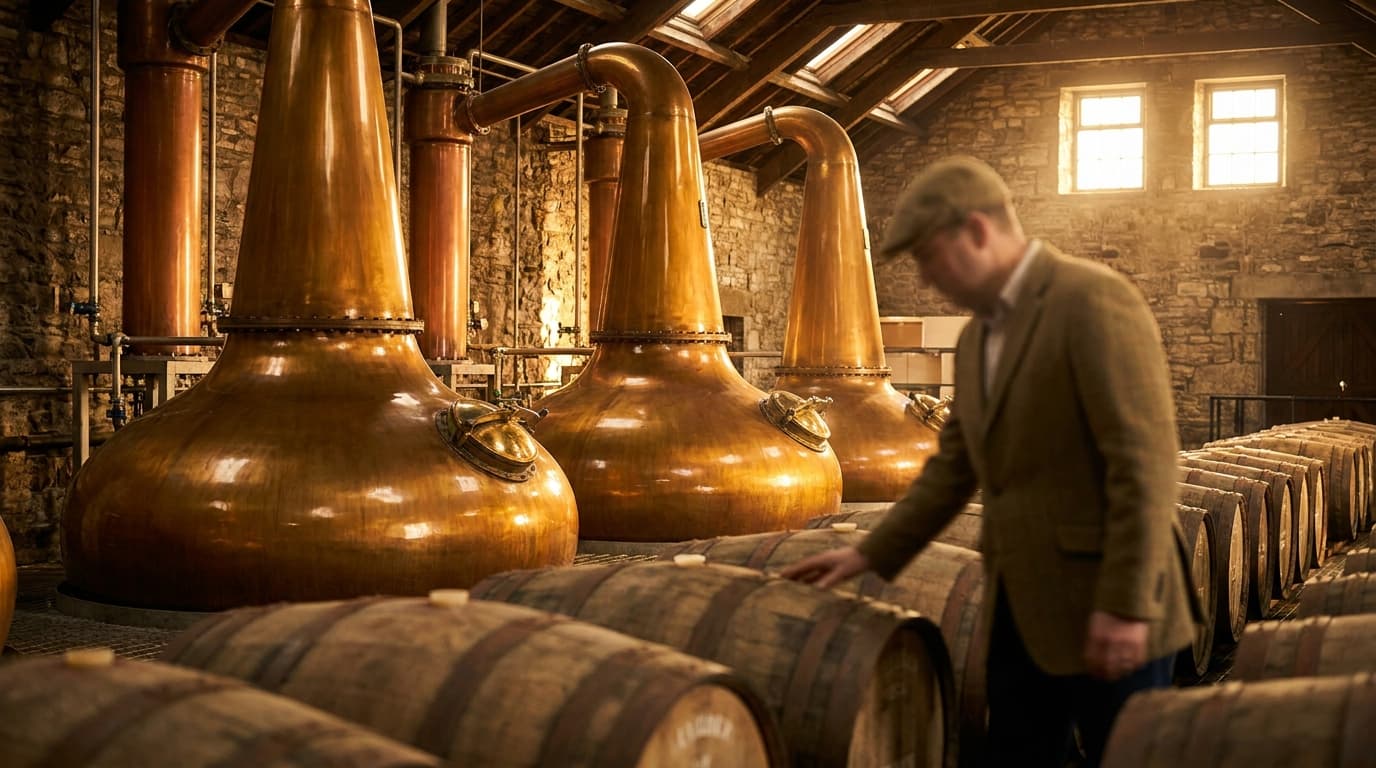
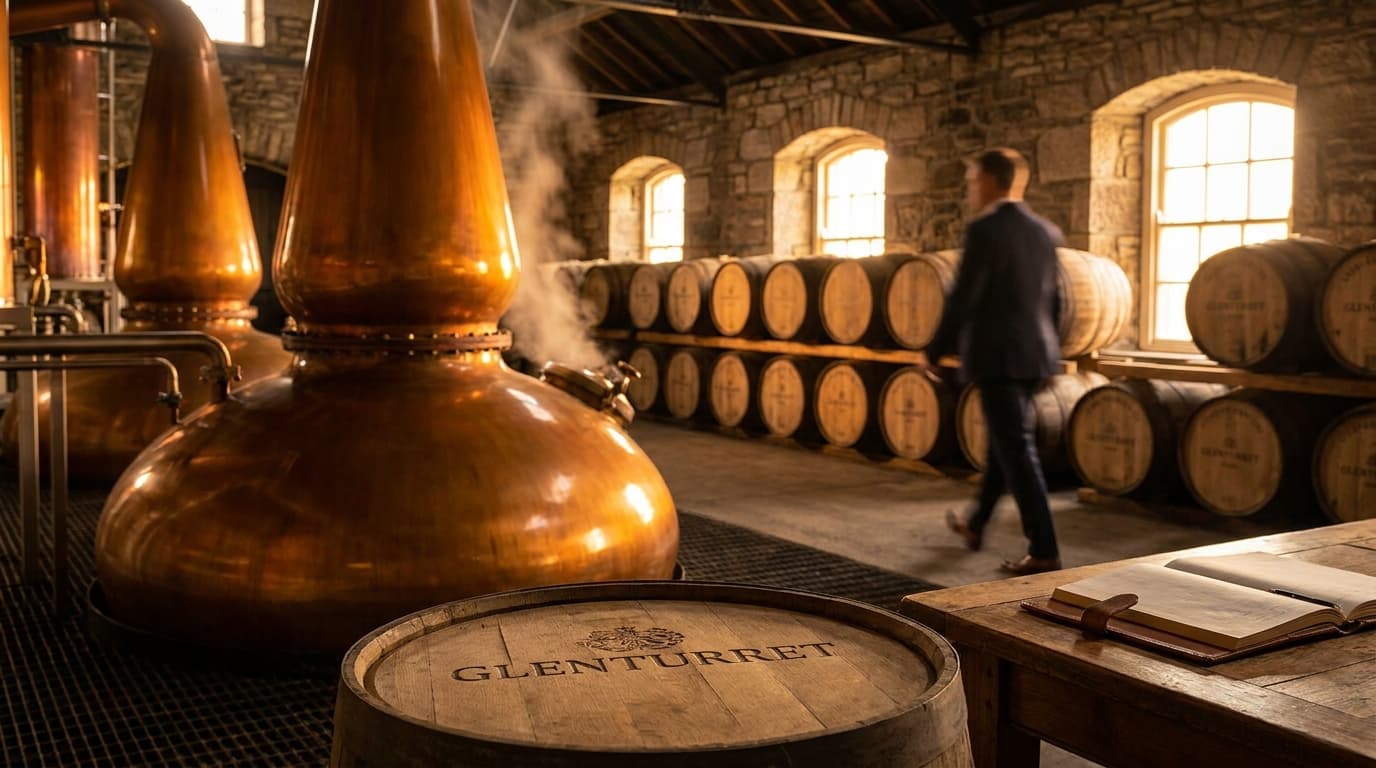
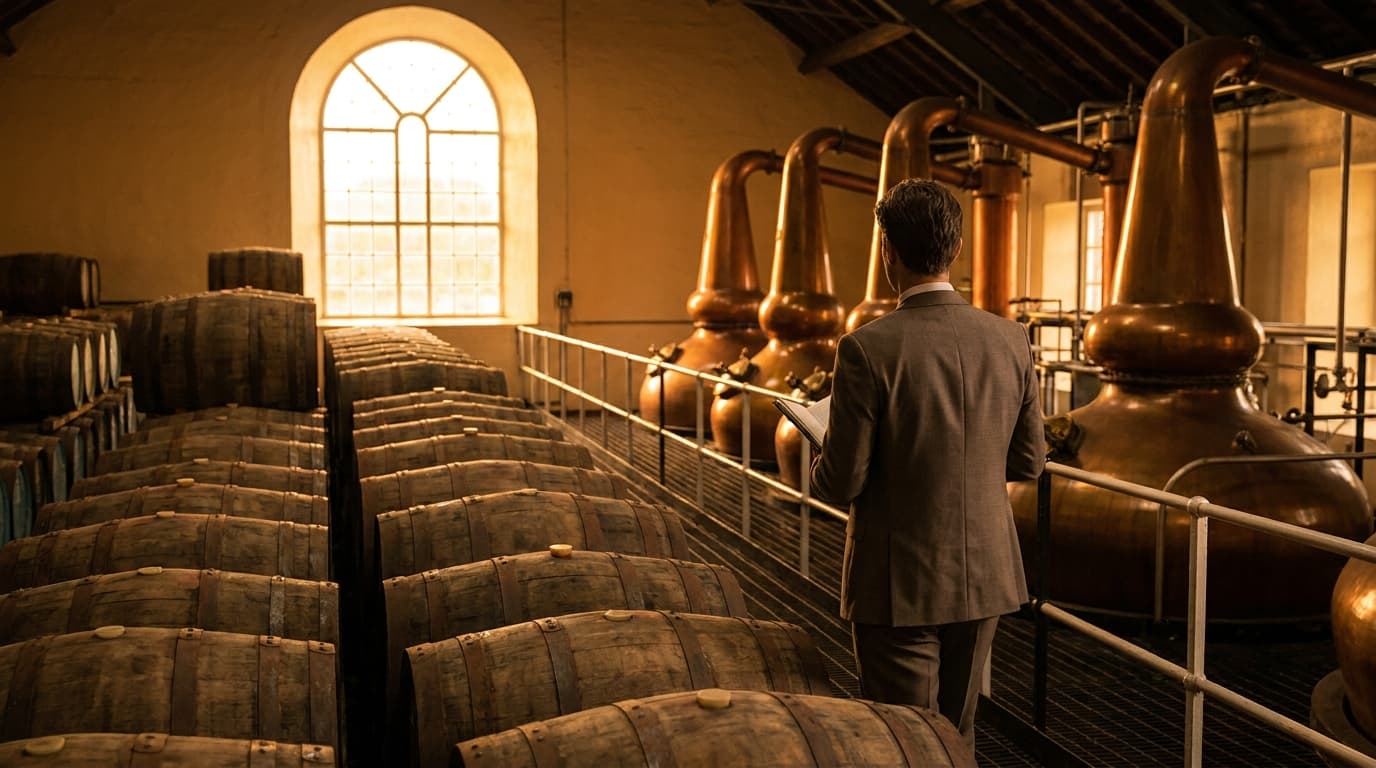
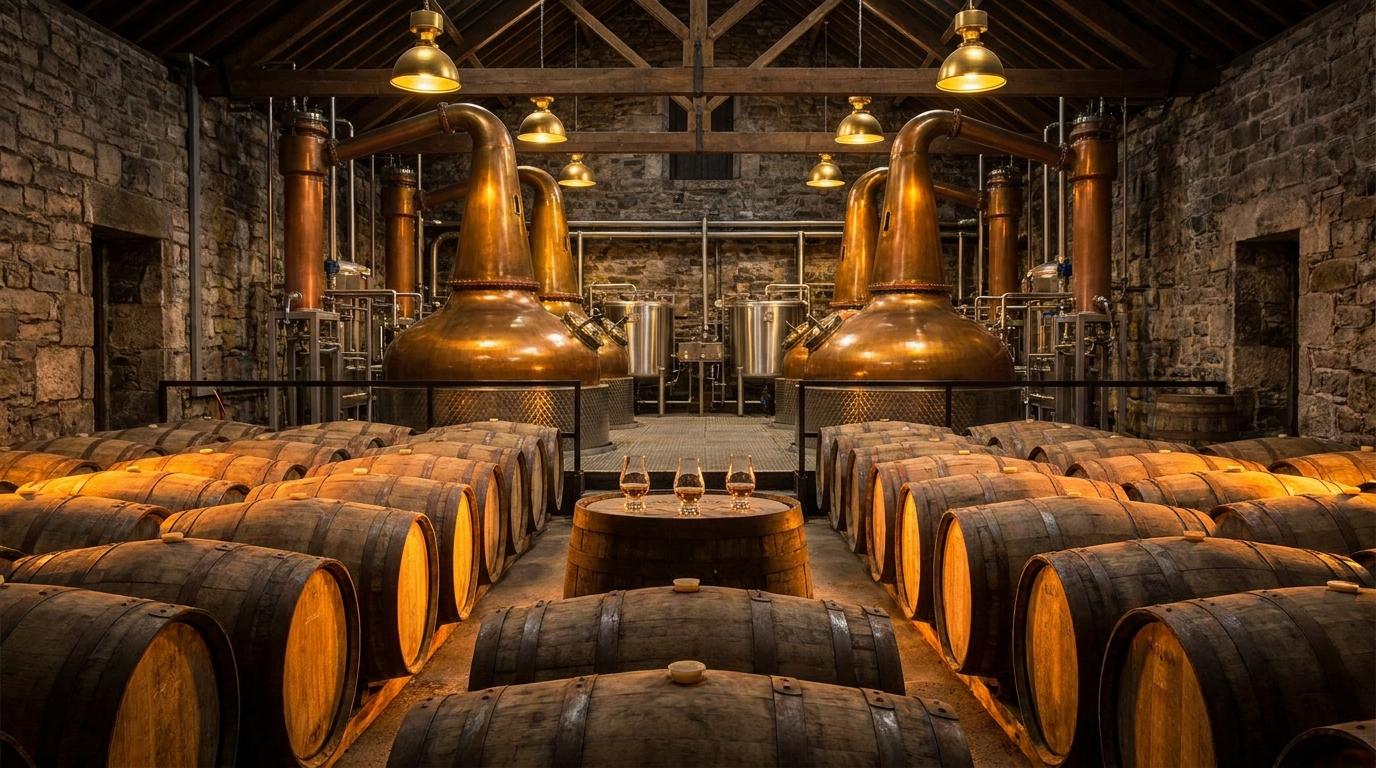
Many of those barrels do not arrive in their original form. Difford's Guide explains that barrels are sometimes broken into staves for shipping and rebuilt in Scotland, typically turning the staves of five 190-litre bourbon barrels into four 250-litre hogsheads with new ends. An "ex-bourbon hogshead" may therefore be rebuilt from several barrels, which is normal practice, not a defect.
What changed in bourbon and barrel-making in 2026
Bourbon stocks are at record levels. The Kentucky Distillers' Association's August 2026 fact sheet reports a record 17.1 million barrels of spirits ageing in Kentucky, up 11% on the year before, of which 16.1 million are bourbon. The KDA's economic impact report, published in February 2026, notes that US distilled spirits production fell 28% in the first eight months of 2025 compared with the same period of 2024.
In December 2025, Jim Beam said it would not distil bourbon at its main Clermont, Kentucky plant for all of 2026, though it would keep distilling at two other Kentucky sites.
Fewer fills mean fewer new barrels, and the cooperages have felt it:
- Speyside Bourbon Cooperage said in a notice to the state of Virginia, dated 23 February 2026, that it would lay off 52 staff and end production at its Atkins facility on 23 April 2026, citing the bourbon slowdown, according to Cardinal News.
- Alabama Cooperage, formerly Jack Daniel's Cooperage, which Brown-Forman sold to Independent Stave Company in 2024, was set to cease production on 14 September 2026, with 71 jobs affected. The closure was disclosed in a WARN filing dated 16 July 2026, reported by The Spirits Business.
Demand for casks in Scotland is falling at the same time. At Diageo's Capital Markets Day on 6 August 2026, the company's supply chain president Ewan Andrew said it had scaled back production across Scotch, North American whiskey and tequila. City AM reported him saying that, compared with the past three years, "we are reducing our barrel by more than 50 per cent in the forward three-year cycle". City AM noted the split between categories is unclear. By late September 2026, distilleries across Scotland had paused production to avoid adding to surplus stock, according to SupplyChainBrain, summarising The Guardian. For the trade side of the same story, see our piece on the US-UK whisky tariff reset.
Why fewer bourbon fills now affect Scotch casks years later
Bourbon barrels reach Scotland when they are emptied, not when they are filled. The barrels available to Scotch distillers in any given year depend on how much bourbon is being bottled, and the barrels filled in 2025 and 2026 are the ex-bourbon casks of several years from now. A market report from Global Market Insights describes this link, noting that strong US fills can later increase the supply of ex-bourbon casks while weaker fills can tighten it.
Two forces pull against each other. Bourbon cuts point to fewer used barrels later in the decade. Scotch production cuts mean distillers need fewer casks now. We could not find a public, reliable index of ex-bourbon barrel prices, so treat any claim that cask costs are rising or falling, whether from a seller or a commentator, as opinion unless it is backed by real transaction data.
Why how a barrel was treated in the US matters
Whisky Magazine has reported that some bourbon distillers water-rinse emptied barrels to recover more spirit. One Scotch producer quoted in the piece found that rinsed barrels gave much less of the expected first-fill effect, and unrinsed barrels were described as commanding a premium. The label "first-fill ex-bourbon" does not tell you how the barrel was treated before it crossed the Atlantic.
What the barrel trade means for the cask you are being sold
Most casks offered to private buyers are some form of ex-bourbon barrel or hogshead.
Ex-bourbon is the default, not a selling point. American oak is plentiful, so describing a cask as ex-bourbon tells you it is the most common type in the industry. It does not justify a premium on its own.
The size and build affect maturation. A 190-litre barrel and a 250-litre rebuilt hogshead mature spirit at different rates, because their ratio of wood surface to liquid differs. Our guide to whisky cask sizes covers how capacity changes the picture.
Fill history is a separate question. Whether the cask is on its first or a later fill in Scotland is a separate question from its bourbon origin, and it affects how much character the wood still has to give. Our explainer on first fill and refill casks sets out the difference.
Descriptions should match the records. A sales brochure might say "first-fill bourbon barrel" while the warehouse record says "refill hogshead". Those are different casks. Ask the seller for the cask type, fill date and capacity as the bonded warehouse records them, and compare them with what you were told. CaskID is an independent register for verifying whisky cask ownership and authenticity, and it does not sell casks.
Key takeaways
- US law requires bourbon to be aged in charred new oak containers, so used bourbon barrels are a by-product, and Scotch distillers have long been their largest export buyer.
- In 2026, bourbon production cuts and the closure of two US cooperage plants coincided with Scotch distilleries cutting fills, including Diageo's statement that it is reducing barrels by more than 50% over the next three years.
- Bourbon fills today shape ex-bourbon supply years from now. No public price index exists, so treat confident forecasts of cask costs with caution.
- "Ex-bourbon" describes the industry's standard cask. Size, fill history and barrel treatment matter more to a buyer.
- Check that the cask type, capacity and fill date in a seller's description match the bonded warehouse's own record.
Frequently asked questions
Why is Scotch whisky aged in bourbon barrels?
US law requires bourbon to mature in charred new oak containers, so bourbon distillers cannot reuse their barrels for bourbon and sell them on instead. Scotch rules allow casks that previously held spirits, so used bourbon barrels are a plentiful and practical source of oak for Scotch distillers.
Can a used bourbon barrel be refilled with bourbon?
Not if the product is to be sold as bourbon. Under 27 CFR 5.143 bourbon must be stored in charred new oak, although some other US whisky types may use used barrels.
Is an ex-bourbon cask a worse investment than a sherry cask?
Cask type alone does not decide value. Distillery, age, strength, condition and fill history all count. Ex-bourbon is the most common cask type, so it should not be sold to you as rare, and sherry-cask descriptions need the same check against warehouse records.