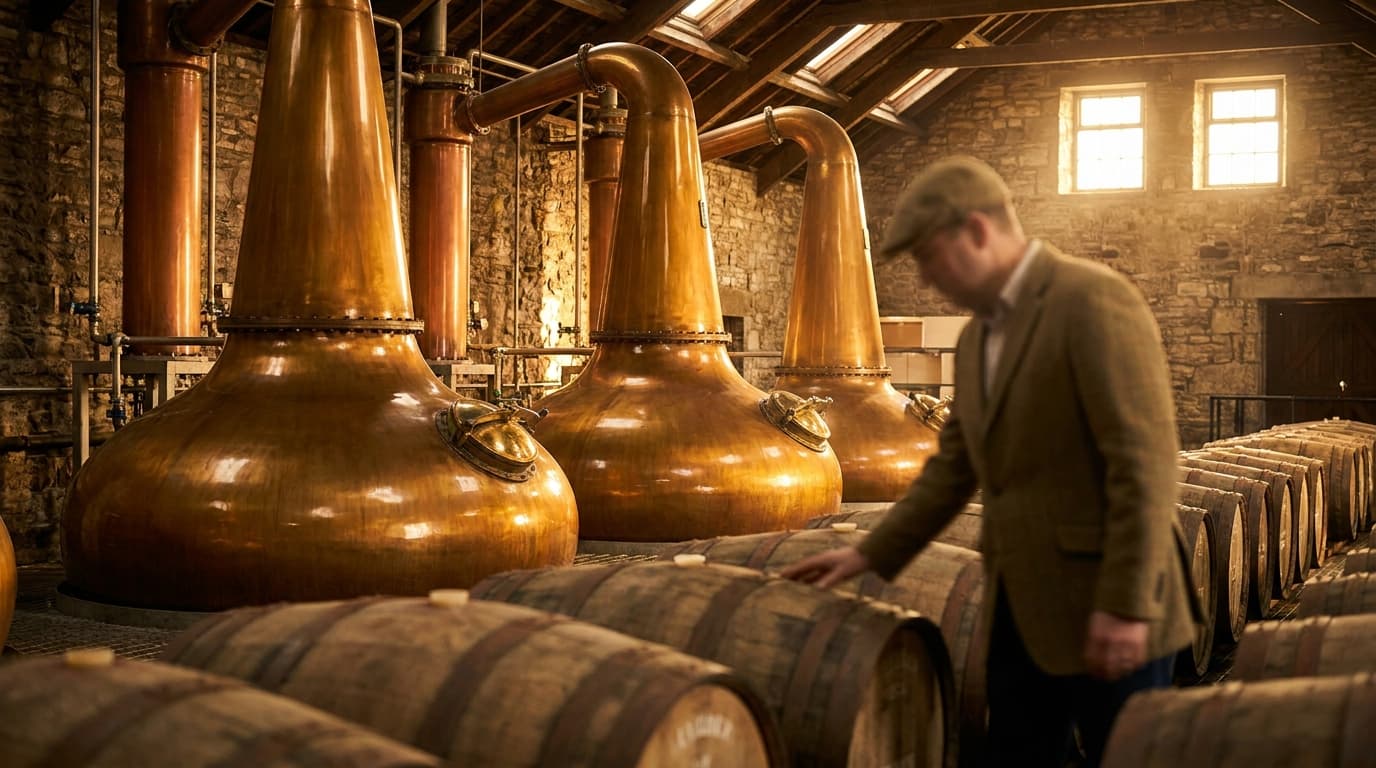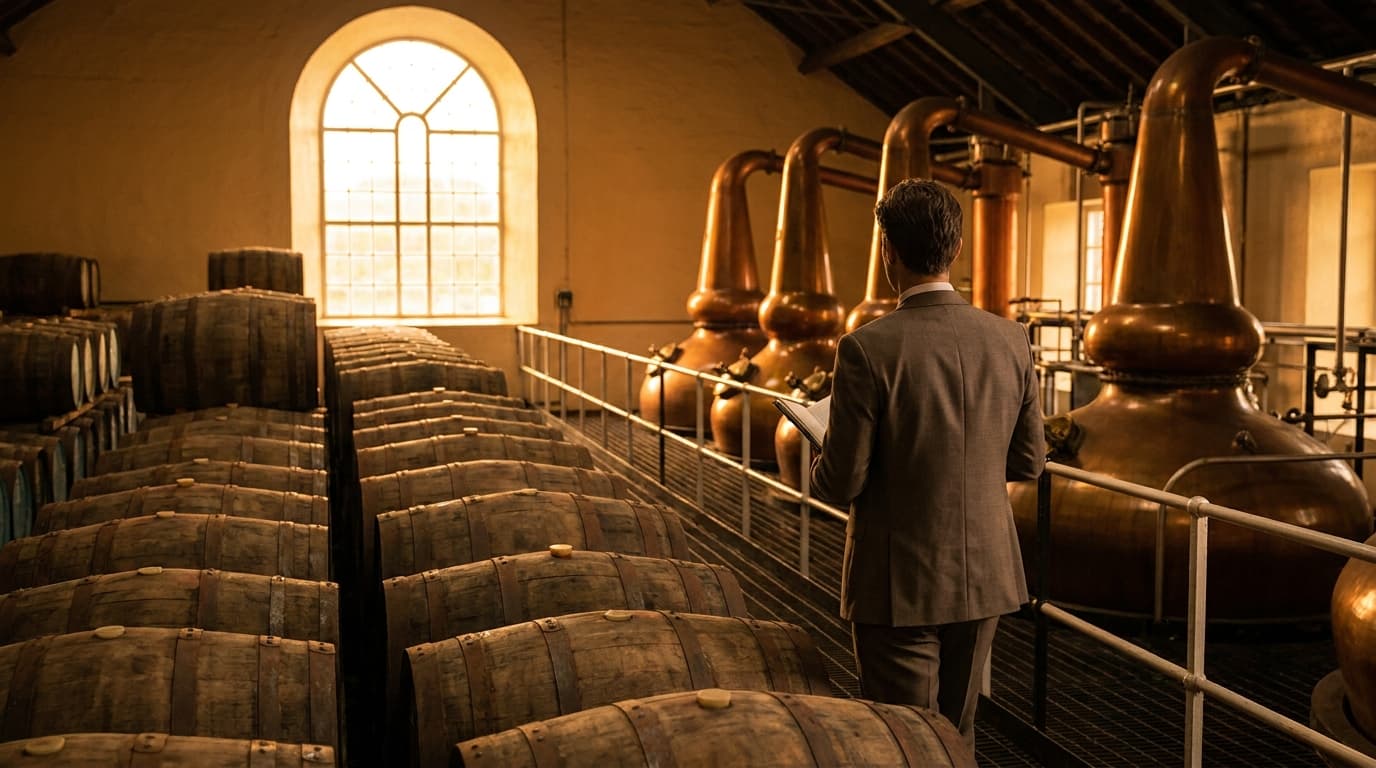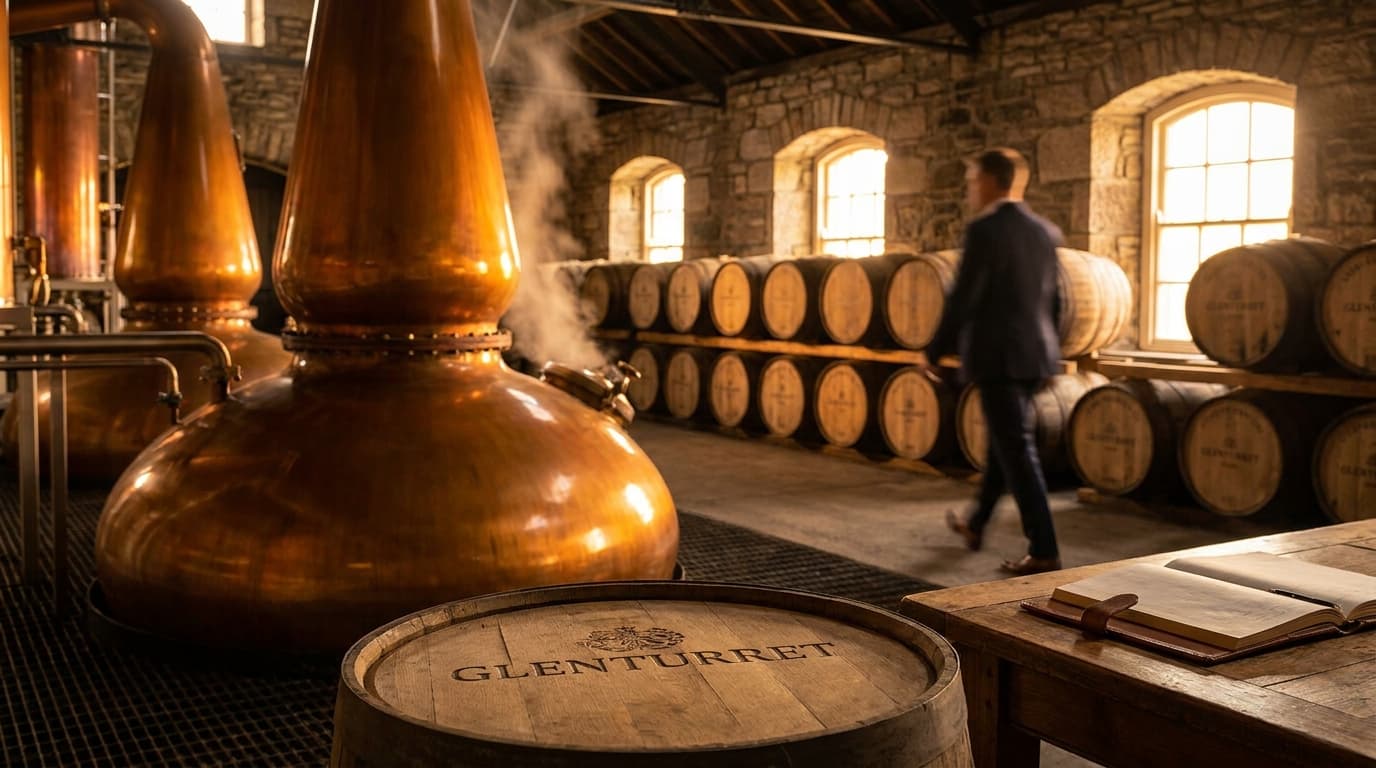
On 10 August 2026, Scotland's oldest working distillery took a step that few named producers have taken publicly before: it went after the people misusing its name in the cask investment market. The Crieff-based distillery announced the move on August 10, 2026, appointing specialist firm The Online Eye to identify and act against misleading cask offers. The message to sellers was direct, and the message to investors should be sharper still: the distillery name printed on your paperwork is not, on its own, proof of anything.
For anyone buying a cask on the strength of a famous label, this development matters. It confirms in public what verifiers have said in private for years, which is that distillery-of-origin claims in the resale market often do not survive independent scrutiny.
What The Glenturret Actually Announced
The initiative is a brand protection programme, not a regulatory action. The Glenturret, Scotland's oldest working distillery, has launched a new brand protection initiative to address the misuse of its name in whisky cask sales and investment propositions. The distillery has instructed a specialist firm to monitor the market and flag descriptions that misrepresent what a cask actually contains.
The tone of the statement was unusually firm for a distillery. The Glenturret said it will seek appropriate action against any party that uses its name to mislead clients, investors or consumers. That is a shift. Historically, distilleries have been reluctant to comment on secondary-market activity, partly because they have no contractual relationship with the end buyer and partly because chasing individual sellers is expensive and slow.
The reason the shift happened is straightforward. The Online Eye has already observed multiple cases in which whisky casks offered for sale or investment were incorrectly described as The Glenturret whisky. Such misrepresentation can disadvantage buyers who later discover the cask carries significantly lower value than expected. It also creates reputational risk for the distillery.
Why Distillery Names Get Misused
Cask investment is a paperwork-driven market. Very few buyers ever see, touch, or sample the cask they are said to own. The name of the distillery is often the single largest driver of a cask's advertised value, so the incentive to attach a prestigious name to a lesser cask is significant.
There are several common patterns.
Mis-description of the fill
A cask may hold spirit distilled at a distillery different from the one named in marketing material. The seller may rely on a similar-sounding name, an old trade or blend association, or on wording such as "from the Glenturret area" that a casual reader interprets as origin. The paperwork behind it, if it exists, may not name the distillery at all.
Reuse of legitimate cask numbers
Cask numbers are internal references. They are meaningful only in combination with the filling distillery's own records and the current warehousekeeper's account. A number lifted from a genuine cask and reused on a marketing document tells the buyer nothing that can be independently checked without going back to those two sources.
Duplicated cask photography
The same photograph, sometimes with a stencilled end changed digitally, can appear across multiple listings and multiple sellers. Without image-level checks, the buyer has no way to know whether the cask in the picture is theirs, someone else's, or nobody's.
Conflation of maturation location and origin
A cask stored in a well-known bonded warehouse is not necessarily filled by a well-known distillery. Sellers sometimes describe warehouse location in ways that imply distillery of origin.
Why Enforcement Rarely Reaches the Buyer
Even when a distillery takes action, that action is generally against the seller, not on behalf of any individual buyer. The distillery is defending its trademark and its reputation. It has no standing to unwind the sale you personally entered into.
That is why events such as the recent Insolvency Service case matter. Cask Spirits Global has been closed after it was found that customers paid nearly £100,000 (US$136,000) for casks of whisky they never owned. A winding-up order removes the company. It does not, on its own, put a cask into the buyer's name or refund the price.
The lesson is old, not new. The Fraud Advisory Panel has traced cask fraud back to the 1880s, when John Robert Whyte Anderson, Distiller at the Talisker Distillery, Skye was convicted of several charges of 'falsehood, fraud, and wilful imposition' after spending 1877 and 1878 selling hundreds of gallons of whisky that he neither possessed nor had ever even been put into cask. The mechanism has modernised. The underlying pattern has not.
What Actually Ties a Cask to a Named Distillery
If the label on the marketing document is not enough, what is? For a cask investor, three lines of evidence do most of the work.
Filling records at the distillery of origin
A cask can be tied to a named distillery only if the distillery's own filling records confirm it. That confirmation is not automatic and, in many cases, distilleries will not respond to speculative enquiries. Serious buyers work through parties who can obtain that confirmation on their behalf.
The warehousekeeper's account
Under HMRC's excise regime, the warehousekeeper is responsible for the goods in bond. The account at the warehouse names an owner. That owner is the person whose name should match yours, in writing, in the warehousekeeper's records. Everything else, including brokered "certificates" and internal spreadsheets, is secondary.
Regauge and cask-type context
A regauge report should be consistent with a cask genuinely of the age, cask type and origin claimed. Cask history, wood type, and fill strength should line up. Where they do not, a buyer has a legitimate reason to ask questions before parting with money.
None of this is exotic. It is the ordinary discipline of buying an asset that lives inside a bonded warehouse. It is also the reason the market has been quietly moving toward independent verification: the seller's paperwork is not, by itself, an audit trail. CaskID exists to sit outside that seller relationship, as an independent register for verifying whisky cask ownership and the evidence behind it.
What This Move Signals for the Wider Market
A single distillery running a brand protection programme will not clear the market of misrepresentation. It will, however, raise the cost of building marketing material around a famous name. That is useful.
Two consequences are worth watching. First, expect more named distilleries to follow. The reputational cost of being associated with a cask scam has become higher than the cost of monitoring the secondary market. Second, expect investor-facing questions to sharpen. A buyer who asks a broker to confirm distillery-of-origin evidence in writing, and to name the warehousekeeper and the account holder, is asking the questions the distillery itself is now paying a specialist firm to ask.
What Investors Should Do Before Trusting a Distillery Name
A workable checklist before any purchase or private sale:
- Ask, in writing, which distillery is claimed as the origin and what document evidences that claim. A promotional brochure is not evidence.
- Ask for the current warehousekeeper's name and the name in which the cask is currently accounted for. Confirm those independently.
- Confirm that the cask number, cask type, fill date, and regauge data are internally consistent and consistent with the distillery's known production.
- Where a distillery has a stated brand protection policy, treat any seller that avoids naming the source distillery precisely as a red flag rather than a quirk.
- Retain independent, dated evidence of every check. If you cannot produce it later, neither can your executor or your buyer.
Conclusion
The Glenturret's move is not a marketing exercise. It is a public acknowledgement, from within the industry, that names are being attached to casks that do not deserve them, and that the burden of catching this has fallen on the distilleries themselves. For investors, the read-across is simple. The name on the paperwork is a claim. The evidence behind it, at the distillery, at the warehouse, and in the regauge, is what turns that claim into ownership of something real.