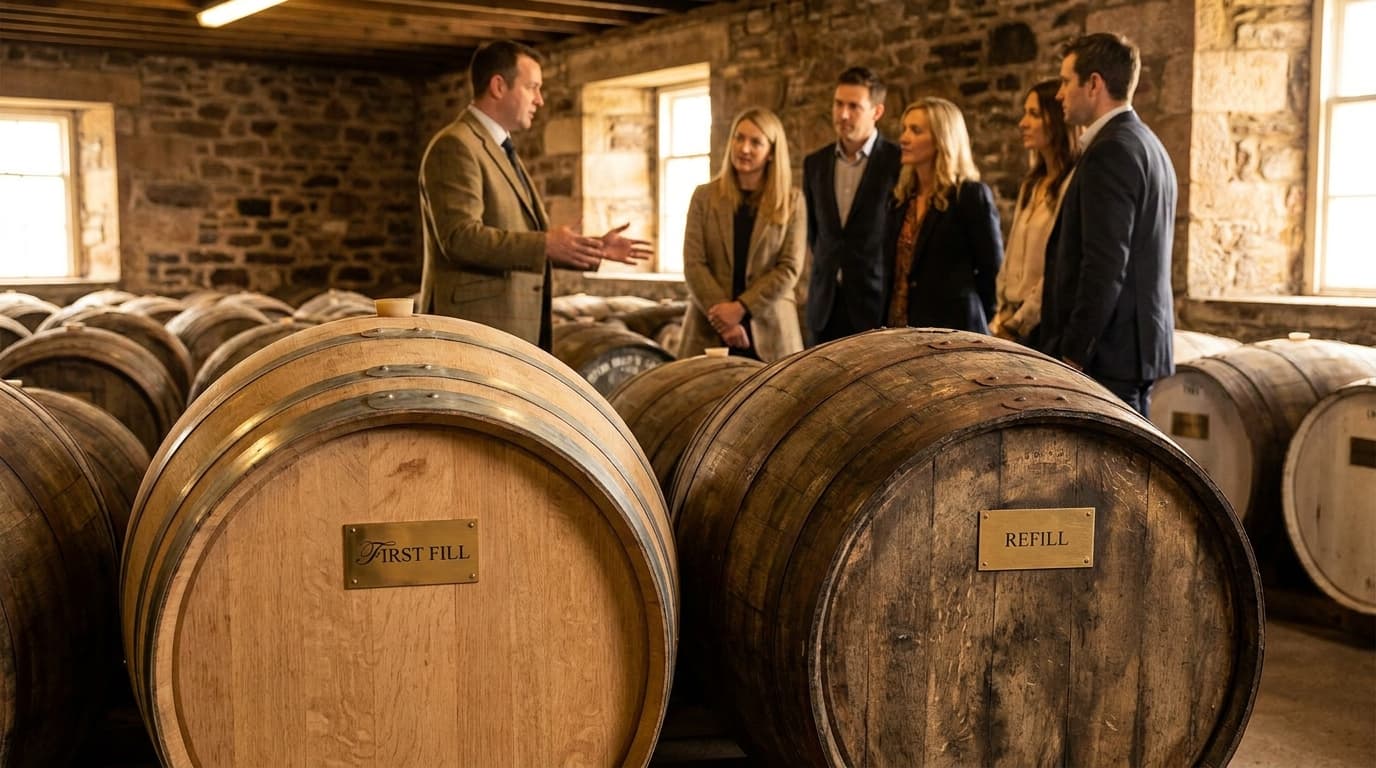
A first fill cask is one being filled with Scotch for the first time after previously holding something else, usually bourbon or sherry. A refill cask has already held Scotch at least once before. The difference matters because the wood is far more active on its first use with Scotch, and that activity shapes colour, flavour, maturation speed, and ultimately the price a cask can command.
What "first fill" and "refill" actually mean in Scotch
In the Scotch industry, "first fill" is counted from the moment the cask first holds Scotch spirit, not the moment it was built. The "first fill" term means this is the first time the cask has been filled with Scotch, so the wood still has a high concentration of extractable compounds and residual flavours from its previous contents.
Almost every cask used for Scotch has already had a working life before it arrives at a Scottish distillery. Bourbon must be matured in new, charred American oak barrels by law in the United States, and once a barrel has been used for bourbon, it cannot be reused for another batch of bourbon. Those used bourbon barrels then travel to Scotland. Sherry butts, port pipes, wine barriques, and rum casks reach the same market by similar routes.
So a "first fill ex-bourbon hogshead" has held bourbon in Kentucky, then been shipped, possibly re-coopered into a larger hogshead, and is now being filled with Scotch for the first time. Fill it a second time with Scotch and it becomes a "second fill" or "refill" cask. Fill it again and it is a third fill, and so on.
Why the cask's previous contents matter
Oak is porous. The spirit it previously held soaks into the staves and leaves flavour compounds behind that the next spirit draws out during maturation.
Bourbon pushes vanilla, coconut, caramel, and sweet baking-spice notes into the wood through a combination of new oak and heavy charring. Sherry casks are a different story. In practice most sherry casks used by the Scotch industry are not casks that aged commercial sherry for decades. They are built specifically for the whisky trade and then "seasoned" with sherry for a shorter period before being emptied and shipped. Spanish oak is often preferred for whisky because of its tannin content, which helps the whisky to oxidise, with wood sourced mainly from forests in Galicia and Cantabria and sent to Jerez for coopering and seasoning. The more delicate styles of sherry, manzanilla, fino and amontillado, are rarely used for seasoning casks, with oloroso and PX far more common.
The point for a buyer: "sherry cask" is a very broad label, and the age, size, oak species, and seasoning regime behind one sherry butt can be nothing like the next. See re-racking and cask finishing for how a cask's wood story can change part way through maturation.
How fill number changes the whisky inside
The wood is doing most of the heavy lifting in maturation. The widely accepted mantra in the industry is that a spirit's contact with the wood during maturation contributes as much as 60 to 70 per cent of the whisky's final flavour. That is why fill number is one of the most important variables in a cask's commercial life.
A first fill cask is at its most active. First fill casks are more active in the maturation process of Scotch, imparting stronger flavours to the whisky from the oak and the previous contents of the barrel, while refill barrels, by contrast, give a lighter influence.
That has practical consequences:
- Colour builds faster. First fill ex-sherry casks in particular can push whisky from pale straw to deep mahogany in a few years.
- Previous-liquid character is more pronounced. A first fill ex-bourbon hogshead will usually show vanilla and coconut clearly. A fourth fill of the same cask may show almost none.
- Longer maturations risk being wood-dominated. Many distillers deliberately choose refill casks when they want a 20 or 30 year old whisky that still tastes of its distillery rather than its barrel. It is often observed that second fill casks are better at preserving distillery character over longer periods of maturation.
None of this makes first fill "better" than refill. It makes them different tools for different jobs.
When a cask becomes exhausted
There is no fixed number of fills at which a cask is "done". It depends on the oak species, the previous contents, the size of the cask, the strength of the spirit, and how long each fill was left in. A hard-worked ex-bourbon barrel might give three useful fills of Scotch. A big first fill sherry butt might remain active far longer. When the wood no longer gives much colour or flavour, the cask is often described as "tired" or "exhausted" and may be rejuvenated (re-charred or re-toasted) or retired.
For cask investors this matters because an older refill cask may be mature in years but under-coloured and under-flavoured, which can hurt its value at bottling. The condition of the wood is one of the things a physical regauge should flag. If you are new to that process, how a regauge is carried out and what it tells you is a useful next read.
Why fill status matters when buying or valuing a cask
Fill status is a key input into what a cask is worth. A first fill ex-oloroso butt from a well-regarded distillery, bottled at the right moment, can command a serious premium. A fourth fill refill hogshead of the same distillery, same age, will not. Yet in the retail cask market both can be marketed in similar language, with "sherry cask" or "ex-bourbon" doing a lot of undefined work.
A few things to check before you accept a seller's description:
- The distillery's own fill records. The warehousekeeper and the distillery know what fill the cask is on. That information should be reflected in the paperwork you receive, not just a verbal claim.
- Cask size. The Scotch Whisky Regulations 2009 require whisky to mature in oak casks that do not exceed 700 litres in capacity, and the spirit must mature for a minimum of three years in Scotland before it can legally be described as Scotch whisky. See the full range of cask sizes for how size interacts with fill status to affect maturation.
- Previous contents, not just "sherry" or "bourbon". Oloroso, PX, fino, Pedro Ximenez, ex-rye, ex-tequila and wine finishes all behave differently.
- Any re-coopering, re-charring, or re-racking. These change the "fill" clock in ways a one-line description will not capture.
CaskID is an independent register for verifying whisky cask ownership, and the cask attributes recorded against each entry, including fill status and previous contents, are checked against distillery and warehouse records rather than taken from a seller's listing.
Key takeaways
- First fill means the first time a cask has held Scotch, not the first time it has held any liquid.
- First fill casks are more active and impart stronger colour and flavour; refill casks are gentler and often chosen for longer maturations.
- Wood contributes a large share of a whisky's final flavour, which is why fill number is one of the biggest value drivers in a cask's life.
- "Sherry cask" and "bourbon cask" are broad labels; the species of oak, the previous liquid, and the seasoning regime all matter.
- Fill status, cask size, previous contents, and any re-racking should be documented and verifiable, not assumed from a sales description.
Frequently asked questions
Is a first fill cask always more valuable than a refill?
Usually yes, all else being equal, because colour and flavour build faster and the whisky can be bottled sooner at a desirable profile. But a long-aged whisky in a refill cask from a famous distillery can be worth far more than a young first fill from an unknown one. Fill status is one factor, not the only one.
Is "first fill" a legally defined term?
No. The Scotch Whisky Regulations 2009 regulate oak, cask size, maturation location, and minimum age, but they do not define "first fill" or "refill". These are industry conventions, which is why what they mean in practice depends on the honesty and record-keeping of the distillery and warehouse.
Can a cask be refilled with a different previous liquid, like finishing a bourbon-matured whisky in a sherry cask?
Yes. That is usually called "finishing" or "re-racking" rather than a straight refill, and it changes the character of the whisky in the final months or years before bottling. The important point for an owner is that any such move should be recorded against the cask so the final description reflects reality.
Sources
- scottishfield.co.uk: scottish fields bluffers guide to wood and casks
- scotch-whisky.org.uk: faqs
- legislation.gov.uk: data.xht
- whiskyadvocate.com: scotch whisky technical file amended cask types
- milroysofsoho.com: what is a bourbon cask the american oak influence on scotch whisky
- azuspirits.co.uk: maturation scotch whisky
- whiskyinvestdirect.com: scotch whisky casks and barrels
- uk.bruichladdich.com: whisky casks
- whiskyandwisdom.com: complete guide to oak casks and whisky maturation
- sherry.wine: sherry butts and scotch whisky
- masterofmalt.com: oloroso sherry cask whisky what is it and how is it produced
- milroysofsoho.com: what is a first fill cask understanding its role in whisky maturation