If you have lost money on a whisky cask and someone then contacts you offering to recover it or to buy your cask, treat the approach as a likely scam until you have proved otherwise. The tell is almost always money flowing the wrong way: a fee, tax, or "release" charge you must pay before anything comes back to you. Genuine recovery bodies such as the police and the Official Receiver do not charge victims upfront, and a genuine buyer pays you, not the other way round.
What is a whisky cask recovery scam?
A recovery scam is a second fraud aimed at people who have already been defrauded. The FCA's guidance on recovery room scams says they usually follow a boiler room or other investment scam. It adds that the people behind the original scam may run the recovery operation themselves while posing as a different firm, or sell victims' details on to others.
The US Commodity Futures Trading Commission describes recovery frauds as a form of advance-fee fraud: you pay upfront for the chance of a much larger sum later. In cask cases, the "larger sum" is either your lost purchase money or a sale price for a cask that may be worth far less than you were told.
The pattern is widespread. A TransUnion Freedom of Information request to the FCA found that 17% of scams reported to the regulator in 2025 mentioned a form of recovery room scam. That figure covers all scam types, not casks specifically.
Why cask fraud victims get targeted a second time
Cask buyers who have been mis-sold have three things a recovery scammer wants: a documented loss, a reason to hope, and often a cask they cannot easily value or sell. The ASA has criticised cask adverts that fail to tell consumers cask sales are not regulated by the FCA. The FCA also notes that people who deal with unauthorised firms cannot use the Financial Ombudsman Service or the Financial Services Compensation Scheme. With no ombudsman or compensation scheme to turn to, an offer of private help is more tempting.
Victims are often left unsure what they own. In August 2026 the High Court in London wound up Cask Spirits Global Limited after an Insolvency Service investigation. Investigators identified 17 customers who had paid £97,249 in total. According to the government announcement, only four of them had valid ownership documentation, and some held certificates for casks that did not exist. That kind of doubt is exactly what a recovery caller exploits.
Two ways recovery approaches are pitched to cask owners
"We can get your money back"
The caller claims to be a law firm, recovery agent, regulator or government body. The FCA says these operations use cold calling, high-pressure tactics, and upfront charges described as a tax, solicitor or administrative fee. It warns that the resulting losses can exceed the original one. These operations often have professional-looking websites with false claims of past recoveries, and they frequently use webmail addresses. The FCA notes that it, the government, law enforcement and law firms do not contact consumers from webmail accounts.
"We have a buyer for your cask"
The second version targets people who still hold a cask, or think they do. The pitch is that a buyer is waiting, but a charge must be paid first, which for a cask might be presented as a regauge, transfer or duty fee. The FCA describes a similar move in share and bond scams, where people who already own shares get calls offering to buy them above market value. If you bought through a scheme that promised to resell for you, our piece on how buy-back arrangements manufacture apparent returns explains why a high offer is not evidence of value.
Who can genuinely help after a cask firm collapses
When a cask company is wound up, a liquidator is appointed. In the Cask Spirits Global case, the Official Receiver was appointed liquidator. The Insolvency Service has warned that fraudsters pose as Official Receivers. It states that the Official Receiver, and any agent legitimately acting for it, will never ask for a fee to recover an investment in an insolvent scheme. It also points out that creditors can only get money back if the liquidated company has assets that can be identified and sold.
After Essex and London Properties was wound up in September 2018, the Official Receiver warned its investors about schemes falsely claiming to retrieve money from the liquidation. Some of those schemes claimed to be the Insolvency Service itself. The Official Receiver said it would contact creditors directly with updates.
The police take the same line. Report Fraud says the police and government agencies never ask for fees to recover money lost to fraud. It replaced Action Fraud on 4 December 2025 for England, Wales and Northern Ireland. In Scotland, the same announcement directs people to Police Scotland on 101.
For what an owner can still prove after a seller fails, see lessons from the Cask 88 and Braeburn collapse.
How to check whether a recovery or purchase offer is genuine
Run every unsolicited offer through these checks before you pay anything or share bank details:
- Ask how they got your details. The FCA advises asking this directly. It notes that fraud reports are shared only between law enforcement agencies, never with private recovery businesses.
- Refuse any upfront payment. Report Fraud lists a caller who knows a lot about your loss but wants a fee first as a core warning sign.
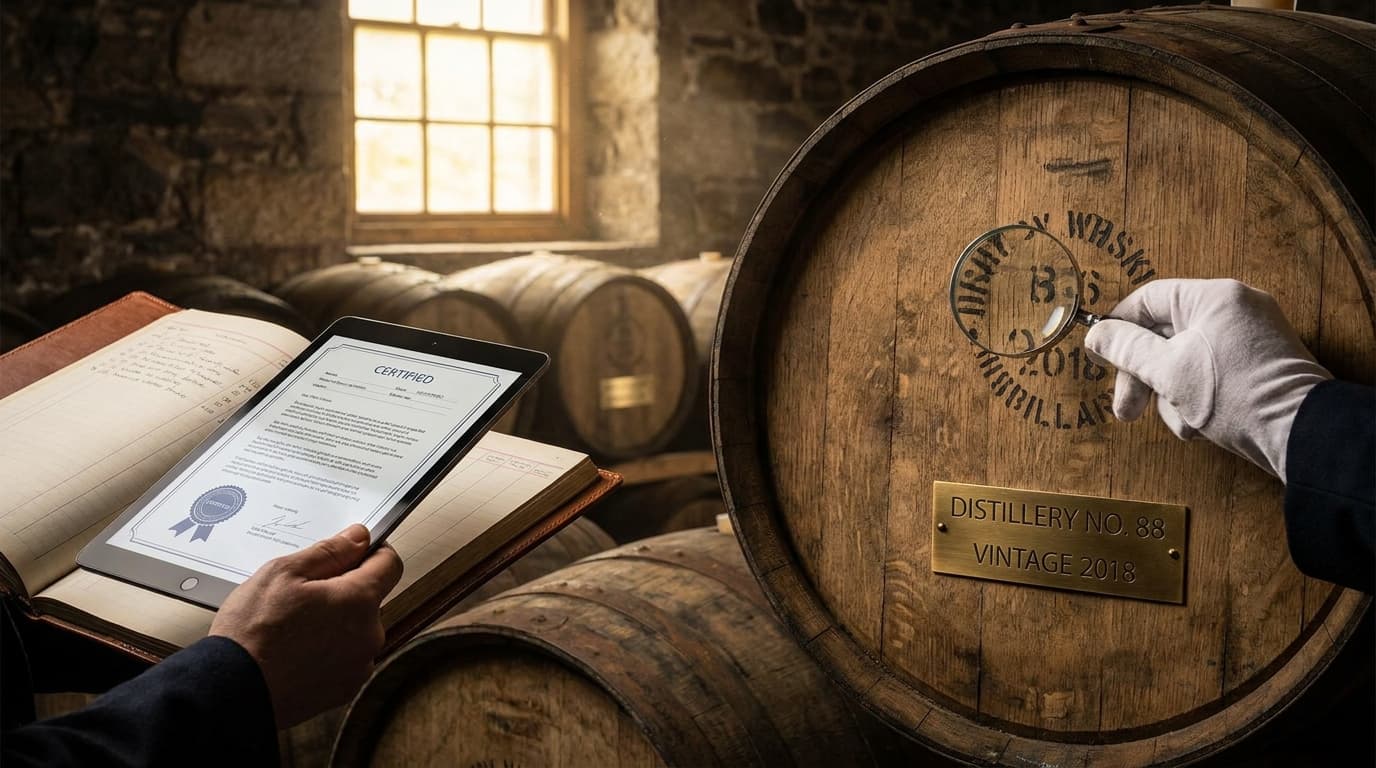
- Verify the organisation independently. For a liquidator, find the insolvency notice in The Gazette. Then check the named practitioner with the Insolvency Service's Find an insolvency practitioner search. For a law firm, the FCA's claims management guidance points to the SRA Register and the Law Society of Scotland. Contact them using details from those registers, not from the caller.
- Watch the channels. The CFTC lists these warning signs: webmail addresses, missing or unverifiable business addresses, and requests to move the conversation to WhatsApp or Telegram.
- Test a buyer's interest in the paperwork. A real buyer will want written confirmation from the warehouse holding the cask and a proper transfer of title. Someone who wants your fee but shows no interest in where the cask is, or in who the warehouse lists as owner, is not buying a cask.
- Check who bills the costs. Real costs exist. The Scotch Whisky Association's guidance notes charges for moving a cask or measuring its contents. Those should come from the warehouse on its own invoice. You can confirm the invoice by calling the warehouse on a number you found yourself.
Check what you own before you answer any offer
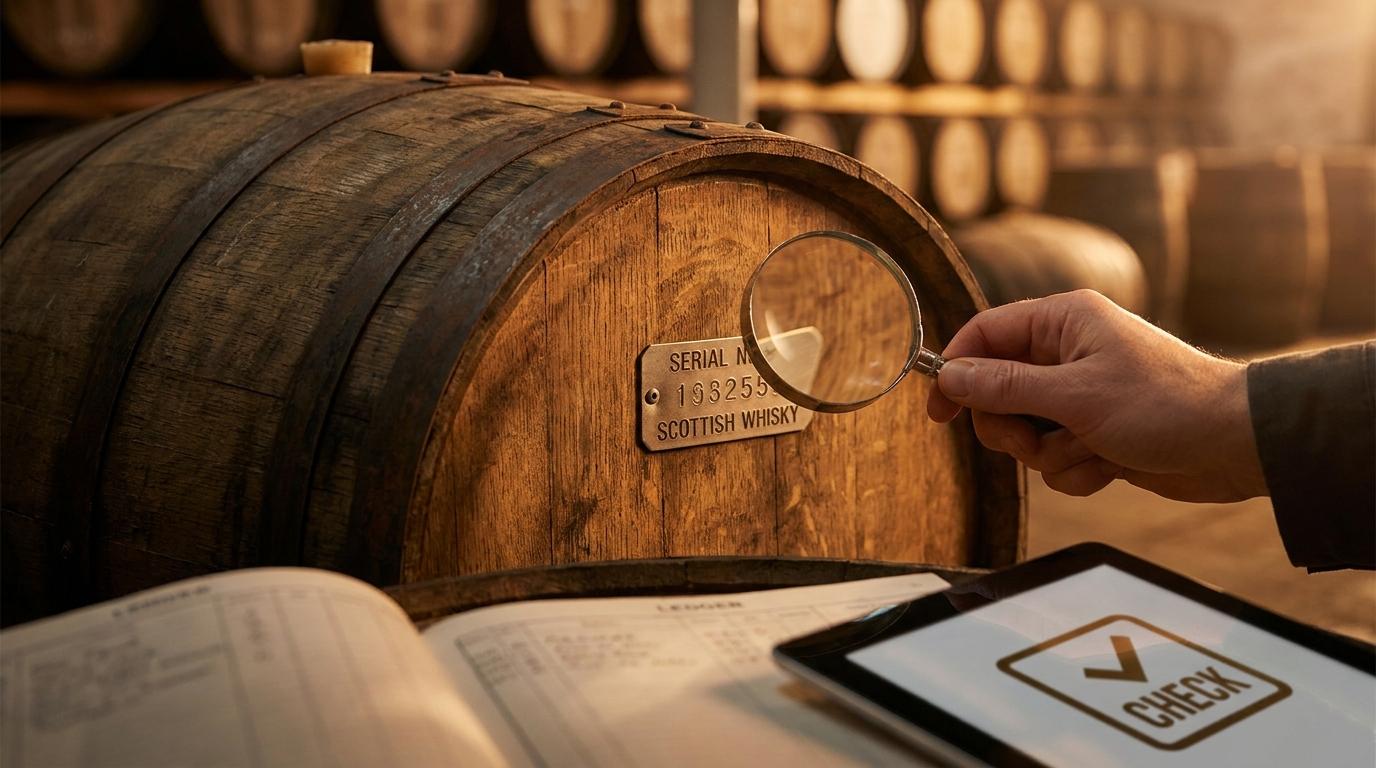
The strongest defence is knowing your own position. The Scotch Whisky Association notes that Scotch whisky may only be matured in an HMRC-approved warehouse in Scotland, so start there. Confirm that the warehouse exists, that it holds a cask matching your cask number, and that its records show you, not the seller, as the owner. A certificate on its own proves little, as explained in why a cask number does not prove ownership.
CaskID is an independent register for verifying whisky cask ownership, and it does not buy, sell or broker casks.
If the warehouse confirms you own a real cask, you can get an independent valuation and decide for yourself whether to sell. If it does not, no third party can sell that cask for you, whatever they charge.
Key takeaways
- Recovery scams target people who have already lost money, and the original fraudsters may be behind them.
- The Official Receiver, the police and government agencies do not charge fees to recover money lost to fraud.
- Treat any offer to buy your cask that needs an upfront payment from you as a scam.
- Check any organisation through official registers and contact it using details you found yourself.
- Before you respond to any offer, confirm with the warehouse that your cask exists and is recorded in your name.
Frequently asked questions
Can I get my money back after a whisky cask scam?
Sometimes, but rarely through a cold caller. If the seller is in liquidation, deal only with the appointed liquidator, who can pay creditors only from assets it can identify and sell.
Is it a scam if someone offers to buy my whisky cask?
Not always. It is a strong warning sign if the approach was unsolicited, the price is well above any independent valuation, or you must pay a fee before the sale. A genuine buyer pays you and will want the warehouse to confirm the cask and its owner.
Where do I report a whisky cask recovery scam?
In England, Wales and Northern Ireland, report it to Report Fraud online or on 0300 123 2040. In Scotland, call Police Scotland on 101. You can also report a suspected scam firm to the FCA on 0800 111 6768.