Every cask investor eventually sees the same pitch: a chart, a case study, or a testimonial showing that a broker "sold a client's cask for a healthy profit." The number is supposed to answer the only question that really matters, which is what a cask is likely to be worth when it comes time to sell. In 2026, that number is increasingly manufactured rather than measured.
Independent whisky broker Mark Littler set out the mechanics plainly in a piece published in The Whiskey Wash on 1 July 2026. The latest version sees companies buying back casks from a handful of customers at an inflated price, then parading that "profit" as proof of what you could earn. The transactions are real. The prices are real. What is misleading is the suggestion that they represent the market a new buyer will be able to exit into.
This article looks at how the buy-back loop works, why it survives in an unregulated market, and the ownership checks that let investors see past it.
How the Buy-Back Loop Is Constructed
The scheme depends on the difference between an internal transaction and a genuine market. A cask trading company sells a cask to Investor A at a retail price. Two or three years later, the same company (or a related entity) buys the cask back from Investor A at a figure that shows a strong percentage gain. That gain is then quoted, sometimes anonymised, in sales material sent to Investor B.
Because the buy-back price is set by the same party that controls the sales pipeline, it does not need to reflect what an independent bottler, auction house or private buyer would actually pay. It only needs to be higher than the original sale price. The "return" is then generalised into an annualised figure and used to underwrite the next round of sales.
For the small number of clients paid out, the return is real. For everyone still holding a cask, it is a marketing input.
Regulatory Scrutiny Has Started to Catch Up
Return figures are the exact area where the UK's Advertising Standards Authority has been most active. In January 2026 the ASA ruled against Whiskey & Wealth Club Ltd over investment claims. The ruling relates to a paid-for Facebook advert, a linked landing page and content on the firm's website, all seen in July 2025, which promoted whiskey cask investments as offering "solid returns" and projected annual returns of between 8% and 18%. Whiskey & Wealth Club also explained that the claim "High return option: 55% per annum projected return (on certain exit strategies)" was a maximum projected return, not an average expectation.
The ASA's response set the bar that other advertisers will now be measured against. Ads should state that whisky cask investments are unregulated in the UK and the value of investments can go down as well as up. This is material information which should be presented prominently. That guidance applies whether the figures come from a spreadsheet, a case study, or a buy-back transaction dressed up as market evidence.
None of this makes buy-backs illegal. It does mean that quoting them as headline returns without evidence and without risk warnings has become an enforcement issue, not a stylistic preference.
Why the Loop Survives
The UK cask market has a structural gap that lets manufactured returns look authoritative for longer than they should.
There is no central register of whisky cask ownership. HMRC records excise duty status and warehousekeeper approvals but does not hold or verify cask-level ownership data. The Finance Act 2006 removed the legal standing of Delivery Orders for spirits held under bond, so the document most retail investors still receive as "proof of ownership" no longer serves the legal function many assume it does. Cask investment is not regulated by the Financial Conduct Authority, which means there is no Financial Services Compensation Scheme cover, no regulated complaints process, and no statutory protection if the company you buy from collapses.
Against that backdrop, a broker's own numbers become the de facto reference point. When there is no independent price feed, no obligation to publish transaction data, and no regulator collecting complaints centrally, a curated buy-back can circulate as if it were a market benchmark.
Enforcement is real but slow. In July 2024, the City of London Police launched a fraud investigation into Cask Whisky Ltd, and that case is one of several the industry has been watching. Criminal cases surface the worst behaviour eventually. They do not deliver a live price feed to investors making decisions today.
What a Manufactured Return Cannot Explain
A buy-back "return" tends to leave certain questions unanswered. Investors can use these questions as a stress test before accepting any performance figure.
- Who was the counterparty to the sale, and were they connected to the seller?
- What did the cask actually contain at the point of sale (age, ABV, regauged bulk litres, litres of pure alcohol)?
- Were storage, insurance, sample and delivery fees deducted from the headline gain?
- Was the cask sold to an independent bottler, a private buyer, or another arm of the same group?
- What percentage of clients from that year's intake achieved a comparable outcome?
If those answers are not available, the figure being quoted is not a return. It is a story about a return.
What Independent Verification Actually Confirms
Verification does not tell an investor what a cask will be worth in five years. Nothing can. What it does is fix the facts a return calculation is supposed to sit on top of.
Those facts are the ones the buy-back loop needs to keep vague:
- Existence: is there a specific cask at a specific warehouse under a specific number?
- Ownership: does the warehousekeeper's stock record show the current investor as the owner?
- Provenance: does the cask history (distillery, fill date, cask type, fill level, ABV) match what was sold?
- Uniqueness: has the same cask been offered, photographed or sold to more than one party?
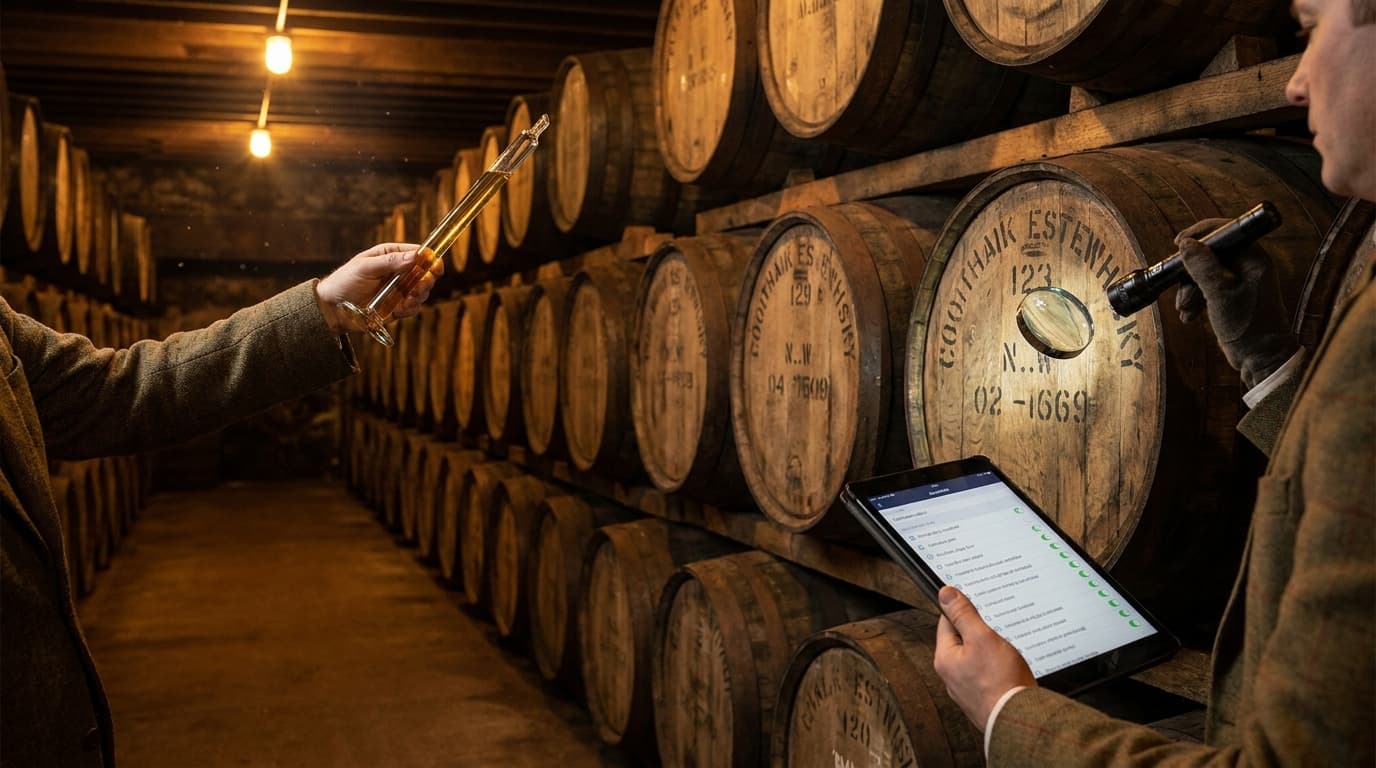
CaskID is an independent register for verifying whisky cask ownership and provenance, and does not buy or sell casks, which removes the incentive to confirm a cask that should not be confirmed. The AI Vision model within the platform is designed to detect duplicate cask images across submissions, which is one of the ways in which the same cask can end up appearing in more than one investor's file.
None of that guarantees a price. It does mean that a "return" being quoted against a specific cask can be checked against an independent record of what that cask is, where it sits, and who owns it.
The Practical Takeaway
The buy-back loop is not a new invention. It works because return figures are the fastest way to close a cask sale and because the market's structural gaps make those figures hard to challenge in real time. The 2026 shift is that regulators have started to name the practice, and independent commentary has caught up with the mechanics.
For investors, the working assumption should be simple. Any return figure presented without a verifiable transaction chain, an independent counterparty and a full cost breakdown is a marketing claim, not evidence. Verification of the cask itself, separate from the party selling it, is what turns a claim back into something a decision can be built on.