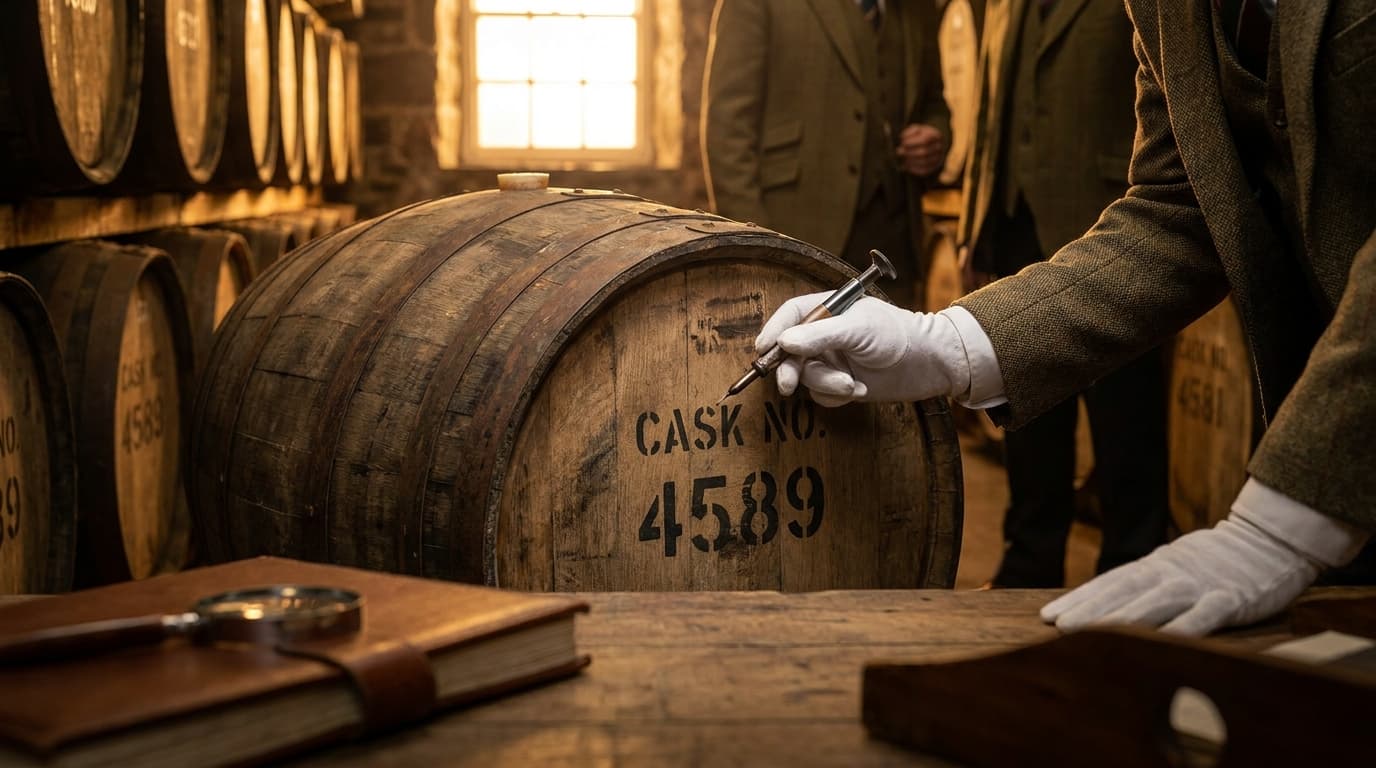
The problem with buying a cask that already has a history
Most first-time cask buyers assume they are purchasing something close to a new-build asset: a cask filled at the distillery, sold through one intermediary, delivered into their name. In practice, a large share of the casks on offer in 2026 have already changed hands two, three, or more times. Each transfer is a moment where documentation can drift out of sync with reality, where a warehouse account can fail to update, and where a serial number can end up attached to more than one purported owner.
The recent enforcement record makes the point sharply. Cask Spirits Global Limited was wound up at the High Court in London on 25 August following an investigation by the Insolvency Service into its sales practices and treatment of investors. Investigators identified 17 customers who paid a combined $132,000 (£97,249), and only four of those customers could be verified as actually owning a cask. That is not a documentation gap at the edges; it is a broken chain of custody at the point of sale.
For anyone buying on the secondary market, the question to ask is no longer just "does this cask exist?" It is: what can the seller prove about every previous owner, and what can the warehouse independently confirm?
Why the chain of custody matters more than the cask itself
A cask number, a distillery name, and a fill date describe a physical object in a warehouse. They do not describe title. Title lives in the warehouse's account records and, historically, in delivery orders passed between owners. The sale of whisky casks is not regulated by the Financial Conduct Authority, and there have been reports in the media of sophisticated multi-million pound "whisky fraud" schemes. Before purchasing a cask of Scotch whisky, it is important to carry out full due diligence on the asset.
There is no statutory public register that answers the ownership question, and there is no supervisory body that has to sign off before a cask changes hands. HMRC's excise systems track duty and volume, not who owns a numbered cask on any given day. That is precisely why the paperwork on prior ownership matters: it is the only trail that exists.
Two structural facts sit behind the risk. First, the Finance Act 2006 removed the legal standing of Delivery Orders in UK excise law, so a piece of paper describing a transfer between owners does not, on its own, transfer title in the way many investors still assume. Second, WOWGR was updated in March 2025 so that it only applies to warehousekeepers. The changes are a welcome update in simplifying the ownership of casks and mean private individuals and businesses face no cap on the number of casks they can own. That removed a regulatory bottleneck, but it also removed one of the few external checks that some buyers had relied on to confirm that a seller was actually authorised to hold what they were selling.
What should be provable about each previous owner
For every prior link in the chain, a serious secondary-market seller should be able to point to four things.
1. Who bought the cask, and when
The identity of the original purchaser (the person or company whose name first appears against the cask on the warehouse's account) and the date they were entered as owner. Not the marketing collateral. The warehouse record.
2. Where the cask has physically sat, and under whose account
If the cask has moved between bonded warehouses, each move should be recorded on both sides. If it has stayed put but the account holder has changed, each change should be traceable in the warehouse's ledger, not only in a broker's spreadsheet.
3. The regauge history
Every ownership handover should be tied to a contemporaneous regauge (or at least an accepted recent one) so that the cask's actual bulk litres and alcoholic strength on the date of transfer are captured. Without this, a cask can be sold at a headline volume that no longer reflects what is inside it.
4. The price at each hop
Not every seller will disclose this, but a resale price history is what separates a legitimate secondary market from a marked-up chain. If a cask has quietly doubled in nominal value each time it changed hands within eighteen months without any regauge or independent bottling event to justify it, that is a chain-of-custody problem in commercial clothing.
What the enforcement record in 2026 has shown
The Cask Spirits Global winding-up is the clearest recent illustration, but it is not isolated. As of late August 2026, the City of London Police is separately investigating Cask Whisky Ltd, Cask Spirits Global Ltd, and Whisky Scotland, with the Cask Whisky investigation running since July 2024 under Operation GAMBOGE. Drinks International has reported that Cask Whisky Ltd is operated by a disqualified director and convicted fraudster Craig Brooks who ran the company under the pseudonym Craig Arch. Brooks and his brother were jailed in 2019 for their part in a £6.2 million carbon credits and rare earth metals investment scam.
In parallel, the ASA has continued to rule against cask investment marketing that overstates returns or misrepresents the underlying asset, including a further ruling against Capgroup in July 2026. And whisky cask investment in Britain is still operating outside financial regulation, even after a new advertising ruling, a major company collapse and an active police investigation into parts of the trade.
The practical consequence for a secondary-market buyer is that there is no ombudsman or compensation scheme to turn to if a cask turns out not to have been the seller's to sell. The forward defence is documentation and independent confirmation, not recourse after the fact.
Cross-border complications for US and Asian buyers
For investors outside the UK, the chain-of-custody problem is amplified by distance. The cask is in a Scottish bonded warehouse; the seller may be UK-based, Hong Kong-based, or operating through a Middle East entity; the money leaves a US or Singapore account. If ownership is not properly registered against the buyer with the warehouse, none of the paperwork travelling by email carries independent weight.
Two things are worth insisting on before wiring funds. Confirmation, directly from the storing warehouse, that the seller is currently the recorded owner of the specific cask being sold. And confirmation, again directly from the warehouse, that the buyer will be entered on the account in their own name (or the name of a nominated entity they control) at the point of transfer, not held via a broker's omnibus account.
Verifying without relying on the seller's own paperwork
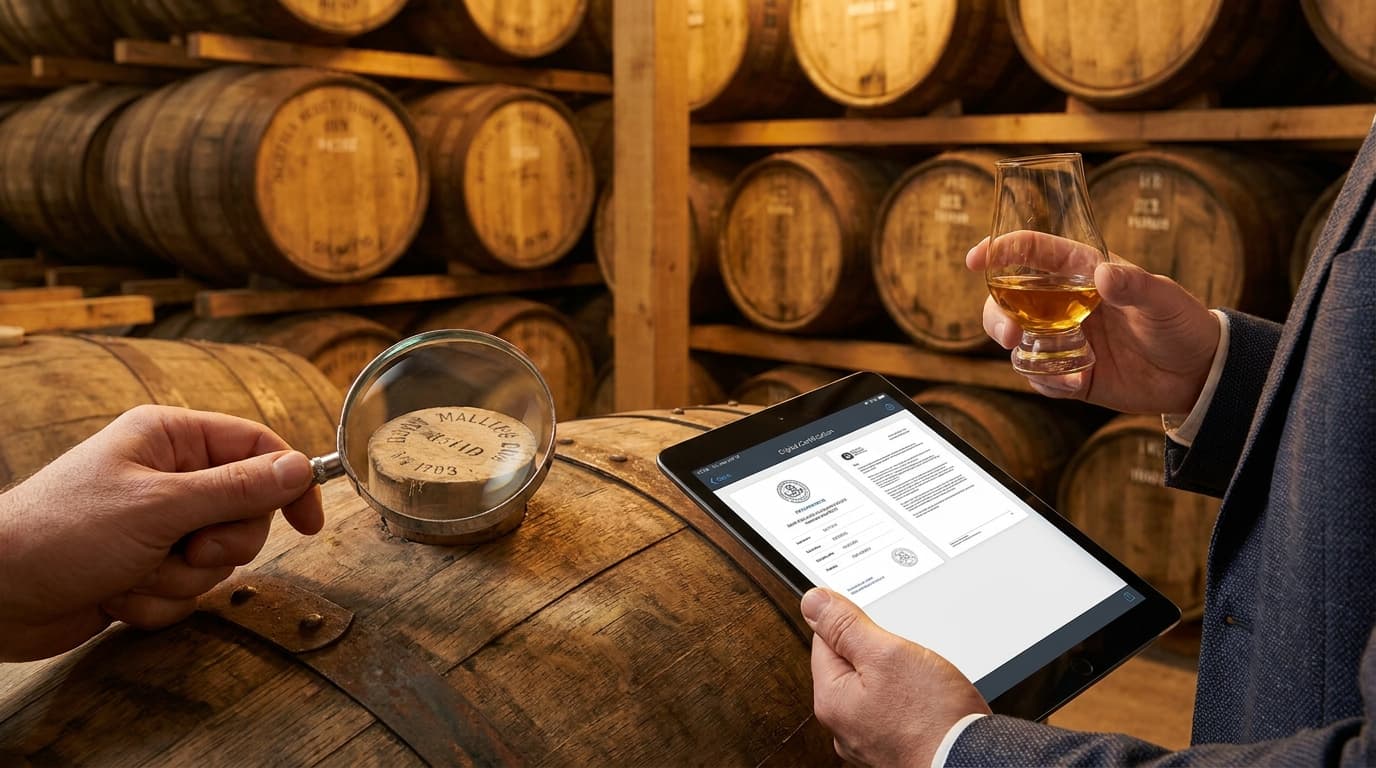
The Scotch Whisky Association's November 2023 guidance on personal investment in Scotch whisky casks makes the point that independent verification matters, and the 2026 enforcement record has hardened that point. CaskID exists as an independent register for verifying whisky cask ownership and provenance, with no incentive to confirm a cask that should not be confirmed because it does not sell casks itself.
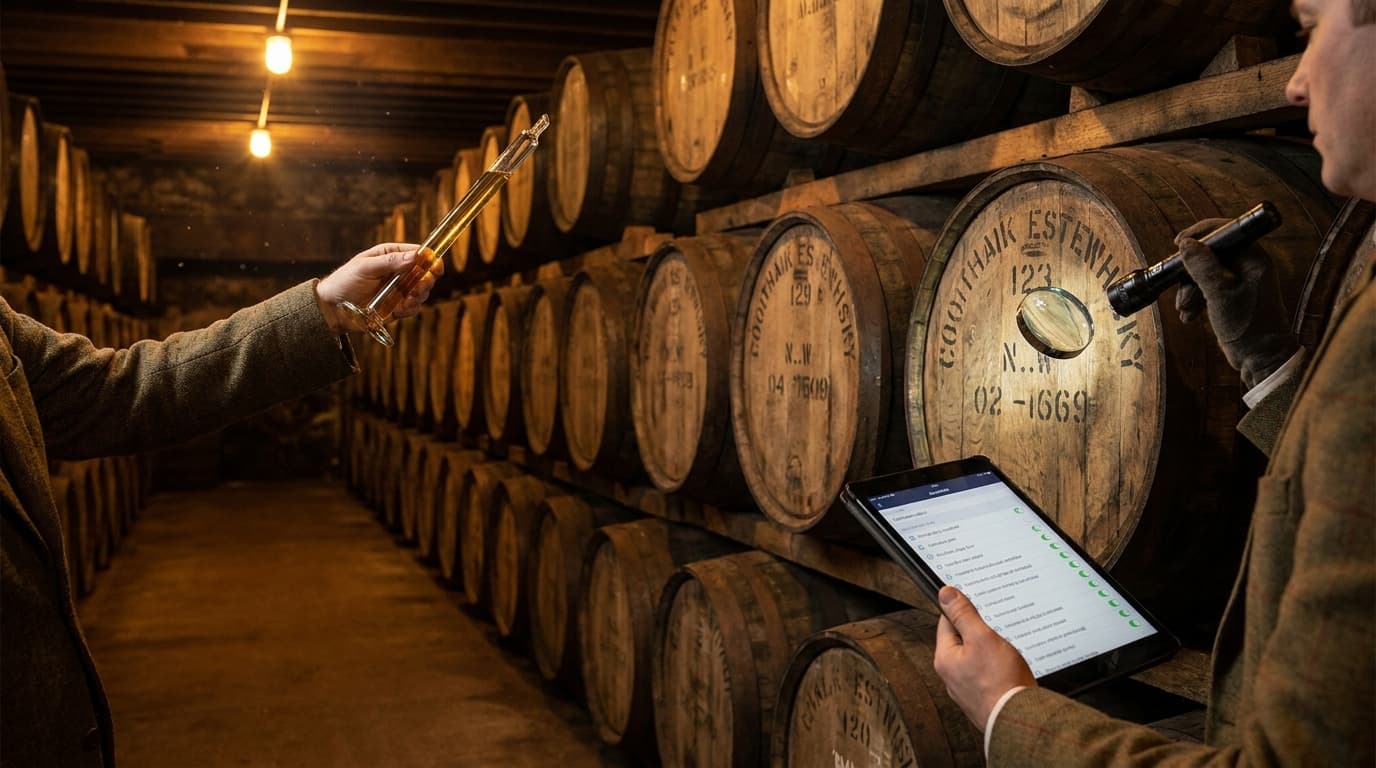
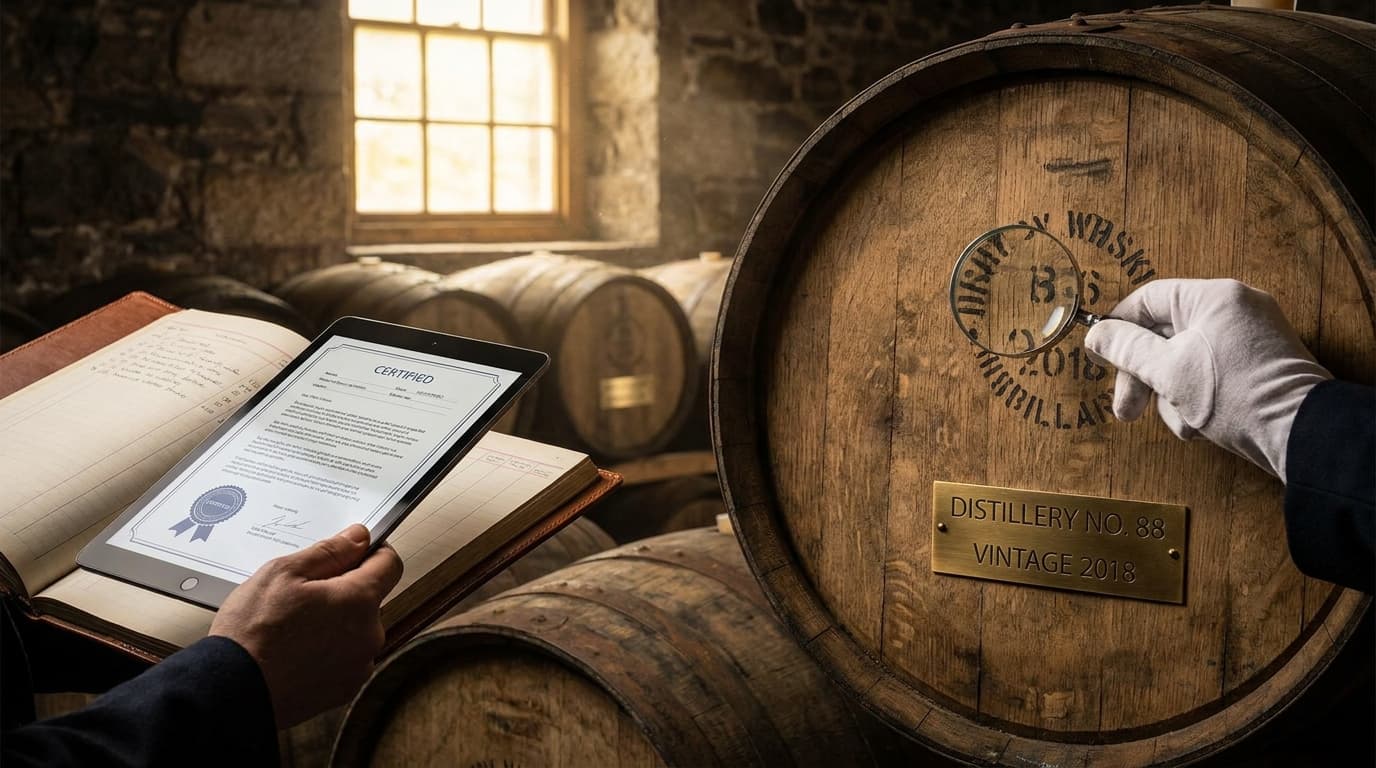
For a secondary-market purchase, the sequence that reduces risk is straightforward. Ask the seller for the full history: original fill, all prior owners, all regauges, all warehouse moves. Cross-check the current owner against the warehouse account directly. Cross-check the physical condition and volume against the most recent regauge. Cross-check images of the cask head against the AI vision checks that surface duplicated cask images across sellers, a known pattern in the fraud cases now working through the courts. Only then talk about price.
The takeaway
A secondary-market cask can be a perfectly good asset. What separates a good one from a problem is not the age of the whisky or the reputation of the distillery on the head. It is whether every hand it has passed through can be traced, dated, and independently confirmed. The market in 2026 will not do that work for a buyer. The buyer, and the independent verification they commission before signing, has to.