Most whisky cask paperwork uses a small set of trade terms. RLA (regauged litres of alcohol) is the amount of pure alcohol found in a cask at its most recent measurement, OLA (original litres of alcohol) is the amount filled in at the start, and bulk litres is the total volume of liquid. The other terms cover age, storage and ownership. Once you know them, you can check that a seller's documents match what the warehouse actually holds.
What do ABV, bulk litres, OLA and RLA measure?
These numbers tell you how much spirit is in a cask and how strong it is. They appear on invoices, sale listings and warehouse records, and they should agree with each other.
- ABV (alcohol by volume): the strength of the spirit, given as the percentage of the liquid that is alcohol.
- Bulk litres (BL): the total volume of liquid in the cask, water and alcohol together. According to ACEO's technical notes, bulk litres and litres of alcohol both fall during maturation, and so does strength.
- Litres of alcohol: the pure alcohol in the cask, worked out as bulk litres multiplied by ABV. For example, 200 bulk litres at 60% ABV holds 120 litres of alcohol. The figure matters when the whisky leaves bond, because UK alcohol duty is charged per litre of alcohol in the product.
- OLA (original litres of alcohol): the litres of alcohol first filled into the cask. It stays fixed for the life of the cask, so it says nothing about what is left inside today.
- RLA (regauged litres of alcohol): the litres of alcohol found when the cask is measured again. ACEO notes that a buyer paying on an OLA basis takes the risk that evaporation losses have been roughly as expected, and that whiskies over 15 years old tend to be bought on an RLA basis.
- Regauge: a fresh measurement of the cask's volume and strength, which produces a new RLA. Warehousekeepers must measure bulk receipts for quantity and strength when spirit arrives, and the Scotch Whisky Association warns that owners may be charged when a cask's contents are measured to check its strength. Always look at the date of the regauge. An RLA from several years ago is not today's figure.
- Angel's share: the trade name for spirit lost through the wood as the cask matures. It is why RLA falls over time and why an old OLA figure can overstate what is left.
What do fill date, new make and cask strength mean?
These terms describe the age and legal status of the spirit in the cask.
- Fill date: the date the spirit went into the cask. The Scotch Whisky Association says a purchase contract should state the year of distillation, along with the distillery and type of whisky. If the whisky has since been moved into a different cask, check whether a document is showing the original fill date or the date of the transfer.
- New make spirit: freshly distilled spirit that has not yet completed the minimum maturation period needed to be called whisky.
- Scotch whisky: a legal definition, not a marketing term. Under the Scotch Whisky Regulations 2009, it must be matured only in Scotland, for at least three years, in an excise warehouse or permitted place. The SWA summarises the other main rules: oak casks of no more than 700 litres and bottling at a minimum of 40% ABV.
- Age statement: any age on a label must refer to the youngest alcoholic component in the whisky.
- Cask strength: whisky bottled straight from the cask without dilution. Most whisky has water added before bottling.
- Cask type: what the cask previously held or how it was prepared, such as ex-bourbon or ex-sherry. The SWA advises that your contract should name the type of cask and the volume of its contents.
What do bond, duty suspension and rack rent mean?
These terms cover where the cask is kept and what it costs to keep it there.
- Excise warehouse (bonded warehouse, or "bond"): a place approved by HMRC where goods liable for excise duty can be stored without payment of the duty. Our guide to what a bonded warehouse is and how it works covers this in more detail.
- Duty suspension (under bond): the state of a cask while it sits in an excise warehouse. Excise duty is suspended while the goods stay there.
- Release for consumption (duty paid): HMRC's term for removal to home use on payment of duty. This is when duty becomes payable.
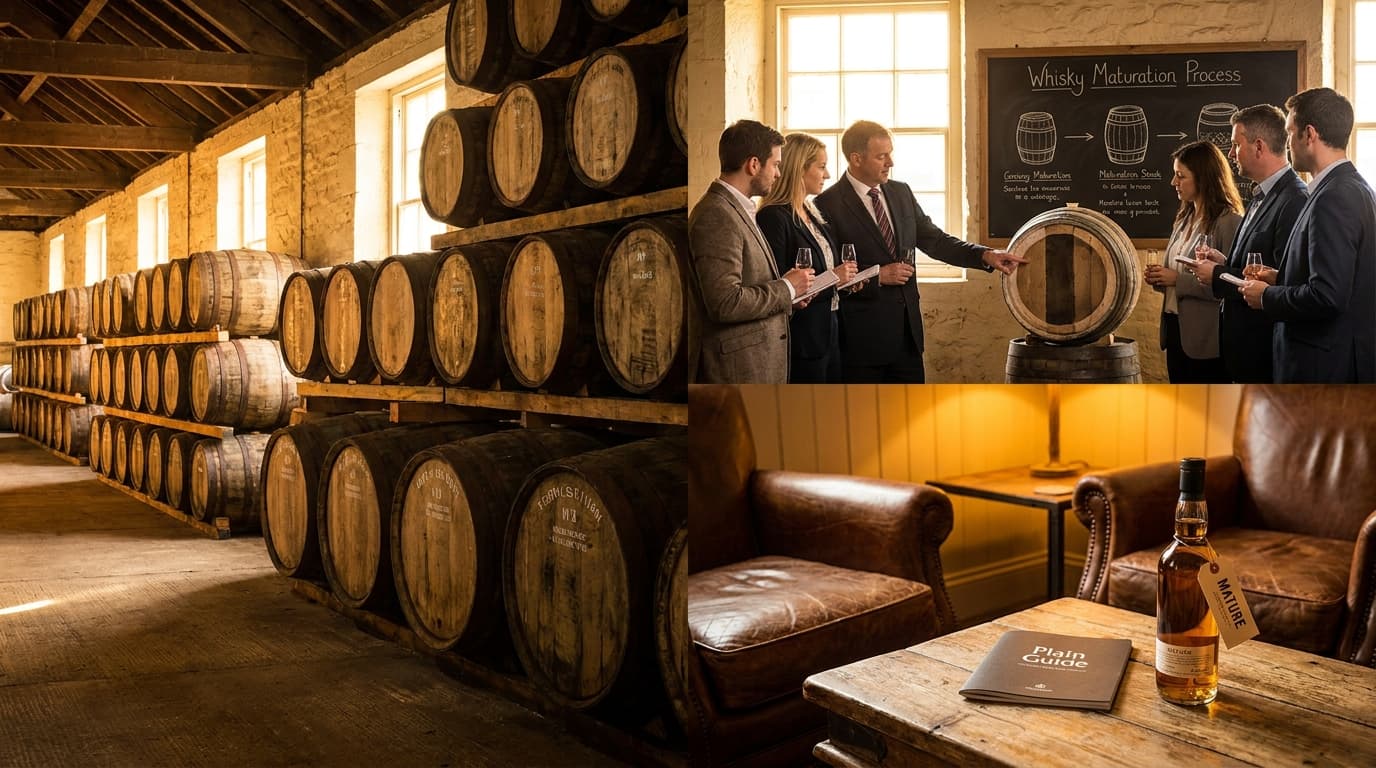
- Dunnage, racked and palletised: the three warehousing systems used in Scotland. Dunnage warehouses are the traditional type, with stone walls and casks stacked two or three high on wooden rails.
- Rack rent: the trade term for the warehouse's charge for storing a cask. The SWA says owners are very likely to be charged for storage and insurance, and there can be extra charges for moving a cask or measuring its contents. Before buying, ask who issues the invoice and whether anything is outstanding.
- Moving under bond: transferring a cask between warehouses without paying duty. The SWA notes that this is strictly controlled and can only be carried out by authorised operators.
Which terms decide who owns a whisky cask?
These are the terms to get right first, because they decide whether the cask is legally yours.
- Warehousekeeper: the business authorised by HMRC to run the excise warehouse and keep its records. The SWA advises buyers to check that the warehousekeeper is registered with HMRC under WOWGR.
- WOWGR: the Warehousekeepers and Owners of Warehoused Goods Regulations 1999. The regulations were amended so that, from 3 March 2025, they apply only to the registration of excise warehousekeepers. Owners of goods no longer register with HMRC. Older guides that tell you to check a seller's WOWGR registration are therefore out of date.
- Cask number: the identifier marked on the cask and used in warehouse records. A contract should state the cask number, but a cask number on its own does not prove you own the cask.
- Delivery order: historically, a written order signed by the purchaser and delivered to the warehouse to notify a transfer of ownership. According to Brodies, the legal requirement to raise one was repealed under the Finance Act 2006, but the term is still widely used for the process of recording a transfer. Our article on what a delivery order actually does explains the gap this left.
- Owner of record: the person the warehousekeeper's records list as the cask's owner. The SWA advises asking the warehousekeeper what documents they require to record ownership in your name. It warns that if a sale is not properly recorded, the cask may be sold without your knowledge.
- Certificate of ownership: a document usually issued by the seller. It records what the seller says, which may not match what the warehouse holds, so treat it as a claim to be checked against the warehousekeeper's records.
CaskID is an independent register for verifying whisky cask ownership, separate from any seller or broker.
Key takeaways
- OLA is fixed at filling. RLA reflects the latest regauge, so always check when it was measured.
- Litres of alcohol equal bulk litres multiplied by ABV, and UK duty is charged on litres of alcohol.
- Rack rent and insurance are ongoing charges. Find out who invoices them and whether any are unpaid.
- The delivery order has not been a legal requirement since the Finance Act 2006. The record that matters is the warehousekeeper listing you as owner.
- Since 3 March 2025, WOWGR registration applies to warehousekeepers, not to cask owners.
Frequently asked questions
What is the difference between RLA and OLA in a whisky cask?
OLA is the litres of pure alcohol filled into the cask at the start, and it never changes. RLA is the litres of pure alcohol found at the most recent regauge, so it shows what is left after evaporation.
What does it mean to regauge a whisky cask?
Regauging means measuring a cask's current volume and strength to produce an up-to-date RLA figure. Warehouses may charge for this, and the result is only as current as the date it was taken.
Does a delivery order prove I own a whisky cask?
Not on its own. The legal requirement for a delivery order was repealed under the Finance Act 2006, so the evidence that counts is the warehousekeeper's record showing you as the owner.