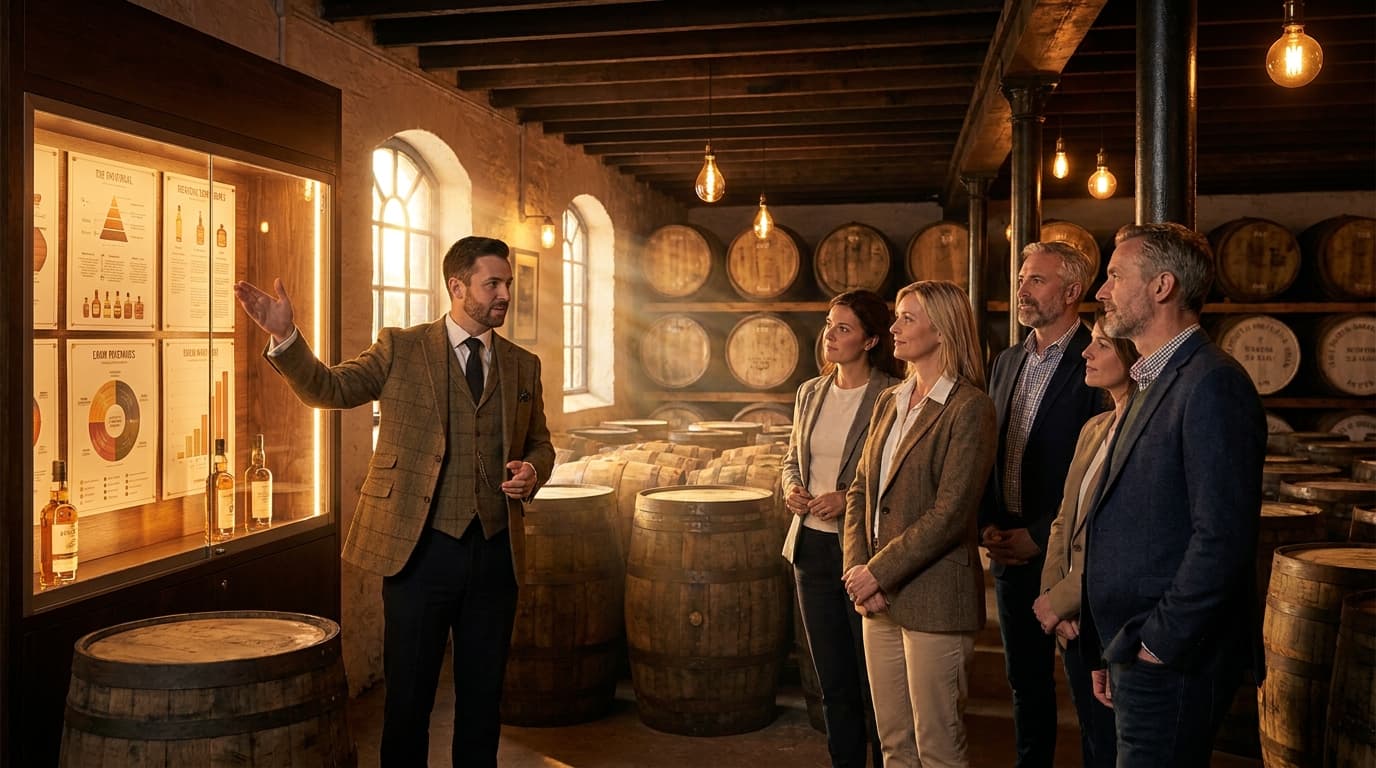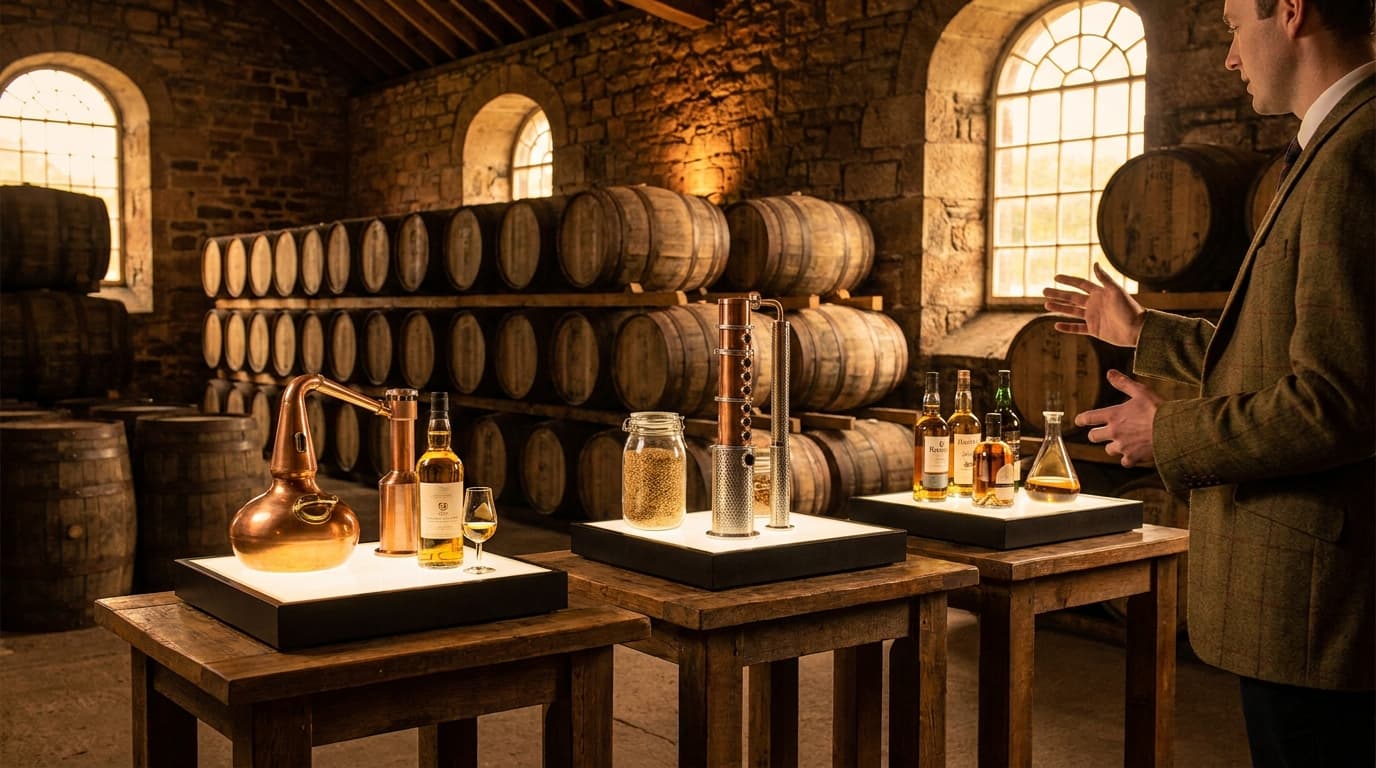
Scotch whisky is split into five legal categories under UK law: Single Malt, Single Grain, Blended Malt, Blended Grain, and Blended Scotch. The differences are not marketing. They are set out in the Scotch Whisky Regulations 2009, and they decide what a producer is legally allowed to put on the label when your cask is eventually bottled. If you own a cask, the category your spirit will qualify for is already fixed by where it was distilled and what went into it.
The legal source: the Scotch Whisky Regulations 2009
Scotch whisky is not just a style. It is a protected product defined in UK statute. The baseline rules come from the Scotch Whisky Regulations 2009, which require Scotch Whisky to be distilled at a distillery in Scotland from water and malted barley (to which only whole grains of other cereals may be added), matured only in oak casks of a capacity not exceeding 700 litres, matured only in Scotland for a period of not less than three years in an excise warehouse or a permitted place, bottled at a minimum alcoholic strength by volume of 40%, and with no substance added except water, plain caramel colouring, or both.
Those rules apply to every Scotch, regardless of category. The five categories then sit on top of that foundation. The regulations introduced and defined five categories of Scotch Whisky: Single Malt Scotch Whisky, Single Grain Scotch Whisky, Blended Malt Scotch Whisky, Blended Grain Scotch Whisky, and Blended Scotch Whisky.
The 700-litre maximum is why some cask types common in other spirits simply cannot be used for Scotch. For context on the vessels this covers, see our guide to whisky cask sizes from octave to gorda.
Single Malt Scotch Whisky
This is the category most private cask buyers are familiar with. Single Malt Scotch Whisky means a Scotch Whisky that has been distilled in one or more batches at a single distillery, from water and malted barley without the addition of any other cereals, and in pot stills.
Two words carry most of the weight. "Single" means one distillery, not one cask. "Malt" means malted barley only, with no other grains. A whisky distilled at Distillery A and then vatted with whisky from Distillery B cannot be called a Single Malt, even if both are themselves single malts. Once vatted, it becomes a different category (see Blended Malt below).
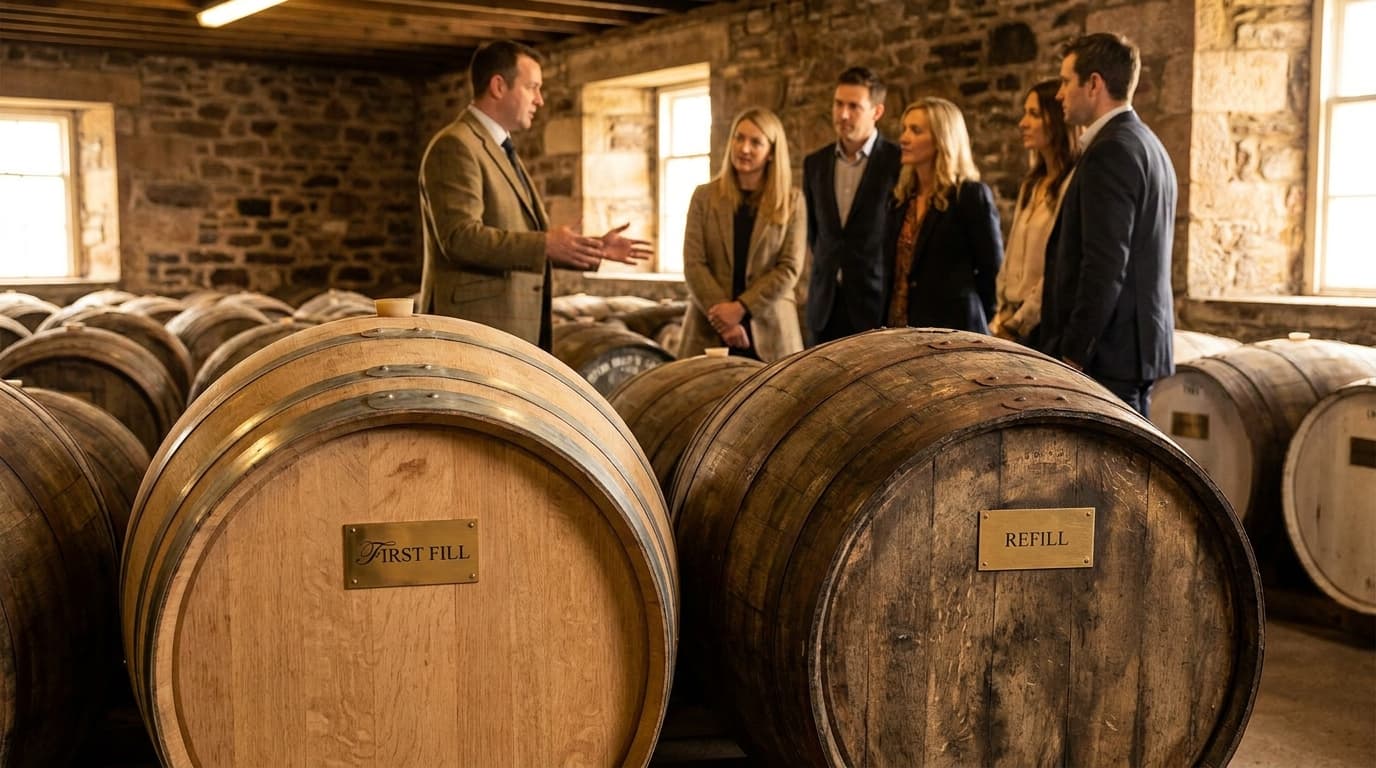
The regulations do not require a new cask. A single malt can be matured in a first-fill ex-bourbon barrel, a refill hogshead, an ex-sherry butt, or a combination, as long as the oak cask is no larger than 700 litres and the maturation happens in Scotland. If you are new to the wood side, our explainer on first fill versus refill casks covers how previous contents shape flavour.
Single Grain Scotch Whisky
Single grain is the least understood category and the one most often misread as low quality. "Grain" here does not mean inferior. It means the mash includes cereals other than malted barley, typically wheat or maize. Single grain Scotch whisky is made from unmalted grains such as wheat, or corn, and a small amount of malted barley at a single distillery, often produced by continuous column distillation and used as a component in blended Scotch whisky.
"Single" again means one distillery. The spirit is usually lighter and more neutral than malt, because column stills strip out more congeners than pot stills do. Independent bottlers have been releasing more aged single grain in recent years, so cask buyers now see this category offered on its own rather than only as a blending component.
The three "blended" categories
The word "blended" in Scotch has a precise legal meaning. It covers three distinct categories, and they are not interchangeable.
Blended Malt Scotch Whisky
Blended Malt Scotch Whisky is a blend of two or more Single Malt Scotch Whiskies distilled at more than one distillery. No grain whisky is involved. Before the SWR 2009, this was commonly known as "vatted malt", and some older bottles still carry that wording.
Blended Grain Scotch Whisky
Blended Grain Scotch Whisky is a blend of two or more Single Grain Scotch Whiskies distilled at more than one distillery. It is the rarest of the five categories on retail shelves.
Blended Scotch Whisky
This is the category most of the world drinks. Blended Scotch Whisky is a blend of one or more Single Malt Scotch Whiskies with one or more Single Grain Scotch Whiskies. The large global brands sit here. A blend's quality depends on the specific malts and grains used and how they are married together, not on the category label itself.
Where "single cask" fits in
"Single cask" is a term you will see constantly in cask ownership marketing, but it is not one of the five categories. In Scotland, "single cask" is not a legally defined term under the Scotch Whisky Regulations, but within the industry it is widely understood to mean whisky that has been bottled exclusively from one individual cask, without blending.
A single cask bottling is still one of the five legal categories underneath. Almost always, it is a Single Malt or a Single Grain, because the whisky in that one cask comes from one distillery by definition. The "single cask" descriptor is a production choice at bottling, not a regulated category.
This matters when you own a cask. You own one cask of spirit from one distillery. You do not own a "Single Malt" as a finished product until it has been matured for at least three years in Scotland and bottled at 40% ABV or above. Up to that point you own maturing spirit that is on track to qualify for a category. For more on what the end of that process looks like, see our walkthrough of how bottling a whisky cask works.
Why the category matters when you own a cask
The category your cask will qualify for is largely set at the distillery gate. You cannot turn a grain cask into a malt, and you cannot blend across distilleries without losing the "Single" prefix. Three practical consequences follow.
First, the category constrains your exit routes. A single malt cask from a well-known distillery has a wider pool of potential independent bottlers and private buyers than a single grain cask from a less familiar producer.
Second, the category drives pricing comparisons. If a seller shows you "comparable" bottle prices to justify a cask valuation, those bottles need to be in the same legal category and from the same distillery, not simply "whisky from the same region."
Third, the category is one of the first things any serious buyer will verify. A delivery note or invoice that just says "Scotch whisky cask" with no distillery named is not evidence of what you own. The distillery, fill date, cask type, and category together form the basic identity of the cask. CaskID is an independent register that lets whisky cask owners verify this identity against the records held by the warehouse and the distillery, without going through the broker who sold the cask.
Key takeaways
- Scotch whisky has five legal categories: Single Malt, Single Grain, Blended Malt, Blended Grain, and Blended Scotch, all defined in the Scotch Whisky Regulations 2009.
- "Single" always refers to a single distillery, not a single cask. "Malt" means malted barley only. "Blended" has three distinct meanings in Scotch, not one.
- Every Scotch, regardless of category, must be matured in Scotland in oak casks of 700 litres or less, for at least three years, and bottled at 40% ABV or above.
- "Single cask" is a widely used industry term but is not one of the five legal categories.
- The category your cask will qualify for is fixed by the distillery and the mash bill, and it shapes who will buy the finished whisky and at what price.
Frequently asked questions
Is single malt better than blended Scotch?
Not inherently. The categories describe composition, not quality. A well-made blended Scotch can outperform a poor single malt in both tasting and price. What single malt offers that blends usually do not is traceability to a single distillery, which is why it dominates the private cask market.
Can a single malt cask contain whisky from more than one distillery?
No. If spirit from a second distillery is added, the resulting whisky stops being a single malt and becomes a blended malt. This is a legal line, not a stylistic one, and it is set by the Scotch Whisky Regulations 2009.
Does the category change if I move my cask to a different warehouse?
No, as long as the cask stays in Scotland and in an excise warehouse or permitted place. Moving between bonded warehouses within Scotland does not affect the category or the age statement, though it should be reflected in the warehouse records and your ownership documentation.