Bottling a whisky cask means taking liquid you own in a bonded warehouse, moving it to an HMRC-authorised bottling facility, paying the UK duty and VAT on the alcohol, and running it through a line that produces finished, labelled bottles. For a Single Malt Scotch, the whole thing must happen in Scotland. Expect to pay duty, VAT, bottling fees, and the cost of bottles, closures and labels, on top of whatever the cask itself cost you.
This guide walks through the practical steps, the costs, and the decisions a cask owner actually has to make.
Can you bottle the cask yourself?
No. Bottling takes place at a facility authorised by HMRC, not in your garage or garden shed. HM Revenue and Customs authorise persons and properties in which the bottling of Scotch whisky can be carried out, and the operator has to run a verified process under the Scotch Whisky Regulations 2009.
For Single Malt Scotch, the geography is also fixed. The Scotch Whisky Regulations require Single Malt Scotch Whisky to be bottled in Scotland from 2012. You cannot ship a single malt cask to a bottler in England, Ireland or anywhere else and still sell the result as Single Malt Scotch Whisky.
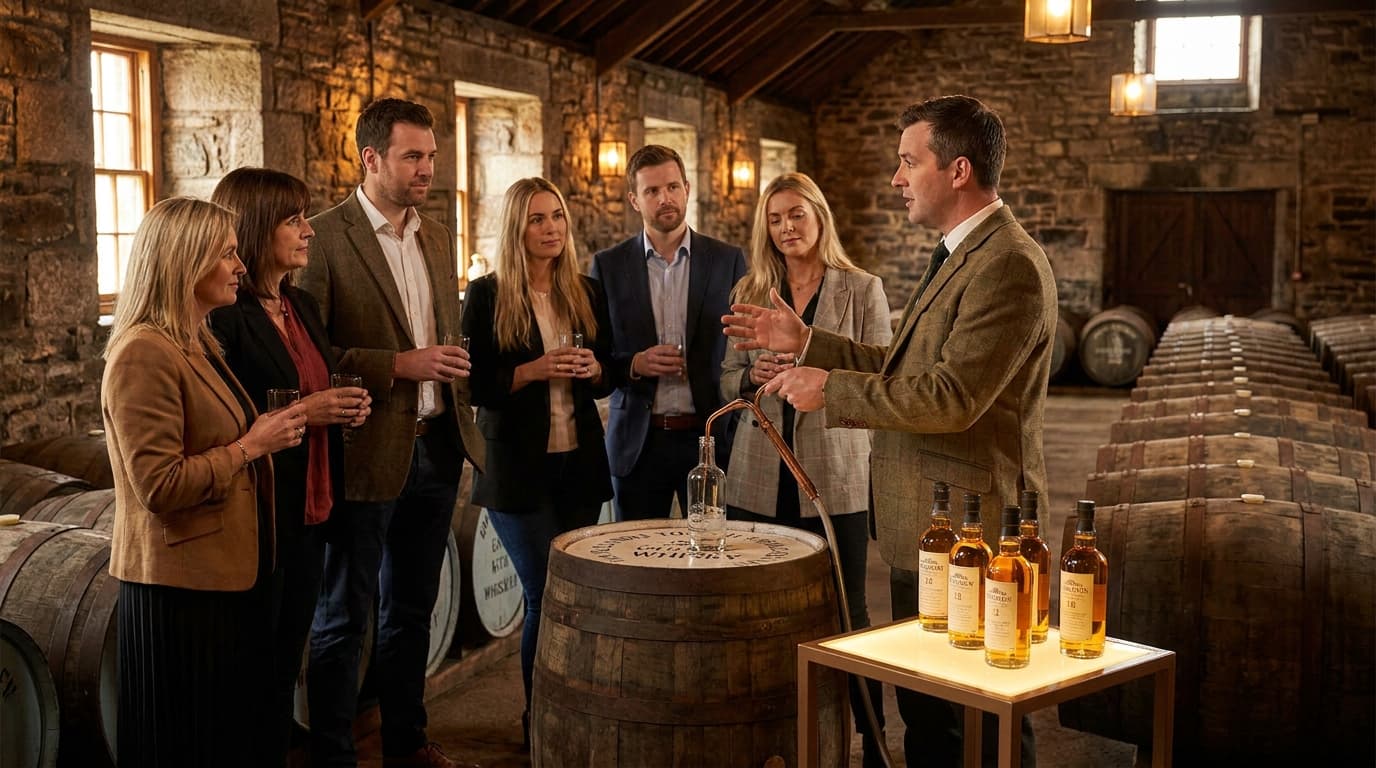
In practice, cask owners either use the distillery's own bottling service (where offered), use an independent bottler, or route the cask through a third-party bottling broker who handles the paperwork, duty payment and logistics for a fee.
When is the cask legally ready to bottle?
Before you can call the liquid Scotch whisky and sell it, two legal thresholds have to be met.
The first is age. Scotch whisky must be matured in oak casks of a capacity not exceeding 700 litres, with the period of maturation being not less than three years. You can bottle a cask on day one if you want, but you cannot label or sell the output as whisky until it has spent at least three years in oak.
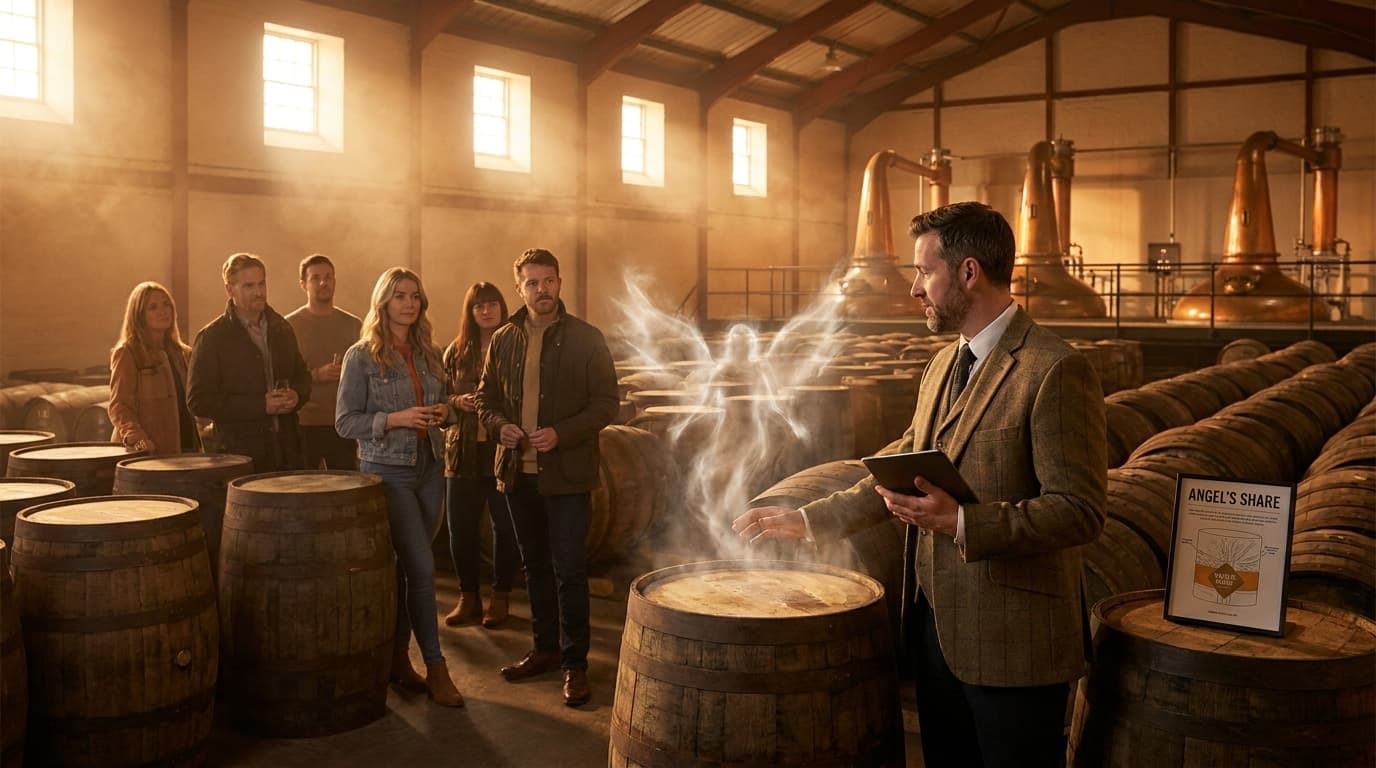
The second is strength. To be sold as Scotch whisky, the ABV must be 40% or higher. New-make spirit typically goes into oak at around 63.5% ABV, and the strength drops over the years as both water and alcohol evaporate through the wood. On average, 2% of the volume of a cask is lost each year to the angel's share, and the ABV also decreases. If a very old cask has dropped below 40%, it cannot legally be bottled as Scotch whisky at all. That is one of the reasons older casks are not automatically more valuable: at some point the liquid falls below the legal strength and can only be used for blending or sold as something other than Scotch. For a deeper look, see the angel's share and how much whisky evaporates from a cask.
How many bottles will you actually get?
Yield depends on cask size, current strength, and whether you bottle at cask strength or dilute to a lower ABV. The common sizes are:
- American Standard Barrel (ex-bourbon): around 200 litres on average, with a yield of about 285 bottles.
- Hogshead: approximately 225 to 250 litres of liquid, with a yield of up to 357 x 70cl bottles.
- Butt (typically ex-sherry): 475 to 500 litres, usually giving somewhere between 600 and 700 bottles.
Those are headline numbers. A regauge, which measures the current bulk litres and ABV in the cask, is the only way to know what your specific cask actually contains at the point of bottling. If a seller tells you how many bottles your cask will produce without a recent regauge, that number is a guess. For more detail, see the whisky cask regauge explained.
If you dilute to 46% or 40%, you get more bottles than if you bottle at cask strength, because you are adding water. Cask strength is a term used by whisky producers when the spirit is bottled without being diluted or with very little dilution. Cask strength bottlings typically carry a premium per bottle but reduce total bottle count.
The duty and VAT bill
Whisky maturing in a bonded warehouse is held under duty suspense. An excise warehouse is authorised by HMRC under the Customs and Excise Management Act 1979 to house goods in duty suspension; excise duty becomes payable to HMRC only at the point at which the whisky leaves an excise warehouse for the last time, typically to be bottled and sold.
Bottling triggers that duty. The current rate matters because it is almost always the largest single cost in the exercise. The rate on all alcoholic products with a strength exceeding 22% ABV is £32.79 per litre of alcohol in the product. That is charged on the pure alcohol in the cask, not the total liquid volume. Alcohol Duty has been charged per litre of pure alcohol since the reform introduced on 1 August 2023.
A worked example: a hogshead holding 230 bulk litres at 55% ABV contains 126.5 litres of pure alcohol. Duty at £32.79 per LPA would be around £4,148, with 20% VAT on top adding roughly another £830. Dilute the same liquid to 46% for bottling and you still pay duty on the LPA you had, because the duty attaches to the alcohol, not the bottled strength.
On top of duty and VAT, you pay the bottler for the physical work, and you pay for packaging. Bottling broker Mark Littler lists typical costs in the range of around £10 plus VAT per bottle for good quality labels, bottles, corks, capsules and boxes, with simpler setups being cheaper and bespoke packaging a lot more. None of that includes shipping, storage of your finished stock, or sales commission if someone else sells the bottles for you.
Labelling and what you can legally claim
The Scotch Whisky Regulations 2009 set out the rules for how a bottle must be labelled: category of whisky, country of origin, strength, volume, and any age statement. If you make an age claim on the label, it has to reflect the youngest whisky in the bottle. If your cask is a single cask bottling, there are additional conventions about identifying the cask number, distillation and bottling dates, and outturn (the number of bottles produced).
What you cannot do is misrepresent the cask type or finish. If you bottle a bourbon-matured whisky, you cannot label it a sherry cask bottling. If you re-racked into a sherry cask for the final year, how long it spent there, and in what wood, has to be accurate. See re-racking and cask finishing verification for how this affects both compliance and value.
Why ownership proof matters at the bottling stage
A bottling facility and the warehousekeeper will only act on instructions from the person who can prove they own the cask. That proof is not a certificate from a broker. It is a warehouse keeper's record showing you as the account holder for that specific cask, with duty suspense in your name. A certificate of ownership issued by a reseller is marketing, not title; see what a "certificate of ownership" actually proves.
CaskID is an independent register that lets a cask owner verify, outside the chain of anyone selling them the cask, that the warehouse record and the cask documentation line up before a bottling instruction is ever issued.
Key takeaways
- Bottling has to happen at an HMRC-authorised facility, and Single Malt Scotch must be bottled in Scotland.
- A cask cannot be bottled and sold as Scotch until it has spent at least three years in oak and is still at or above 40% ABV.
- UK excise duty at £32.79 per litre of pure alcohol is usually the largest cost in bottling, with 20% VAT on top of the duty.
- Yield depends on cask size, current regauged volume and ABV, and whether you dilute or bottle at cask strength; "about 285 bottles" or "about 350 bottles" are only starting points.
- The warehouse will only act on bottling instructions from the proven owner, so verifying title before you commit to bottling costs is essential.
Frequently asked questions
Do I have to bottle a cask myself, or can I sell it in bond?
You can sell a cask in bond, meaning ownership transfers while the cask stays in the warehouse under duty suspense and no duty or VAT is paid at that point. Many private owners sell in bond rather than bottle, because bottling adds duty, VAT, bottling fees and packaging costs that have to be recouped from the bottle sale price.
Can I take some bottles for personal use and leave the rest in cask?
Yes, in principle. A warehouse can carry out a partial drawdown, and you pay duty and VAT on the pure alcohol in the bottles you remove. The rest of the cask stays in bond. The economics usually only make sense for small personal quantities, because the per-bottle cost of a small run is higher than a full bottling.
Does the duty rate change?
Yes. UK alcohol duty rates are set in the Budget and can change year to year. The £32.79 per litre of pure alcohol figure is the rate for products over 22% ABV at the time of writing. Always check the current HMRC rate before modelling bottling costs for a specific cask.