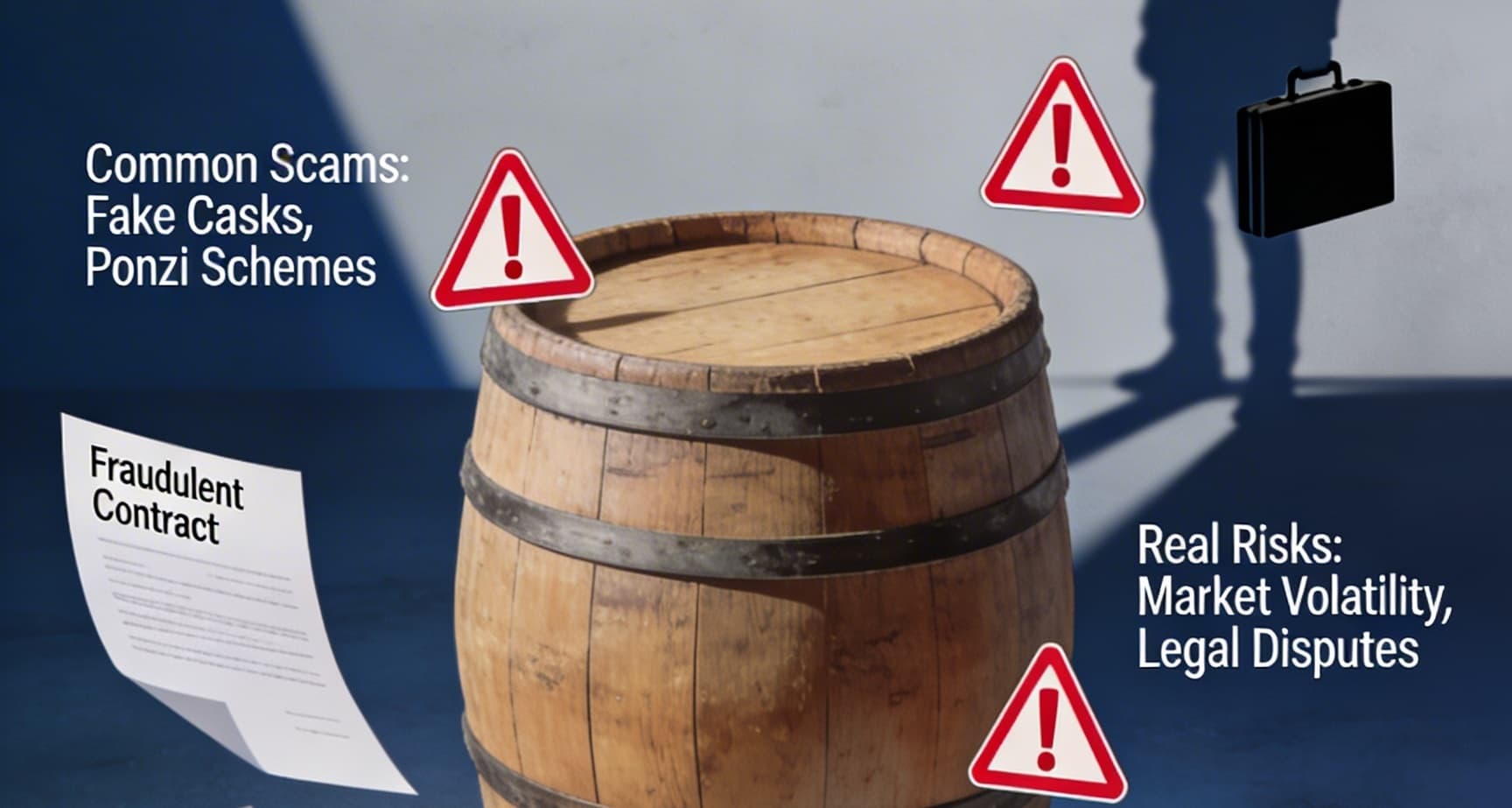
The Dark Side of Cask Investments
There is a profound romance attached to Scotch whisky. It evokes images of misty glens, copper pot stills, and centuries of quiet maturation in damp, earthen-floored warehouses. It is a product of time, patience, and heritage. In recent years, however, a new industry has inadvertently hijacked this romantic imagery. The retail whisky cask investment market. If you spend any time on social media or reading financial news, you have likely seen the advertisements. Beautifully lit oak barrels. Promises of guaranteed returns. “Tax-free annual returns of 8% to 12%". These adverts are poised to show whisky casks as a safe, tangible haven against inflation and volatile stock markets.
It sounds incredibly appealing. Who wouldn't want to own an asset that steadily makes them richer while they sleep? But as observers of the financial and spirits sectors, we have to be completely honest with you. For the average retail investor, the cask investment market is a minefield. It is an unregulated, highly opaque space where the fundamental economics of the asset are often misrepresented, and where sophisticated scammers operate with near-total impunity.
This article isn't meant to criticize anyone who has been tempted by these pitches. The marketing is incredibly convincing. But before you wire your savings to a broker promising double-digit returns on a barrel of new make spirit, you need to understand the dark side of cask investment, the mathematical realities of maturation, and the very real history of systemic fraud that has left thousands of investors with nothing.
The 12% Returns Myth
To understand why this market is so dangerous, we have to look past the sales pitch and examine the economics of casks as assets. A whisky cask is not like a stock, a bond, or a bar of gold. It is a physical, degrading container holding a volatile liquid. When investment firms promise guaranteed high returns, they are often relying on the fact that most people simply don't know how the wholesale whisky trade works, or are not clued up on what the price of such an asset should be in the first place.
The Markup Trap
The trouble almost always starts at the point of sale. Highly aggressive brokers rarely sell casks at true market value. They might buy a freshly filled barrel of "new make" spirit (unaged whisky) directly from a distillery or a wholesale broker for roughly £1,500 to £2,000. They will then turn around and sell that exact same cask to a retail investor for £8,000 to £10,000. Outright scammers have been known to take that margin even further.
If you buy in at that price, you are starting your investment deep in the red. For you to simply break even, the liquid inside the cask has to appreciate by 400% to 500%. In the real, wholesale world of whisky, that level of appreciation takes decades, not the quick three-to-five-year flip the brochures often suggest.
The Angel’s Share and the ABV Clock
Unlike gold, which sits safely in a vault, whisky is a living chemical compound. Every year, approximately 1.5% - 2% of the liquid in a cask evaporates through the wood into the atmosphere, known as the "angel’s share." Over a ten-year hold, you physically lose roughly 20% of the volume of your asset.
Furthermore, the Alcohol by Volume (ABV) decreases over time. By law, Scotch whisky must have a minimum ABV of 40%. If you hold a cask for too long and the ABV drops below 40%, it legally ceases to be Scotch whisky. Its value instantly collapses to zero. It becomes a "spirit drink," which has almost no secondary market value compared to single malt. No two casks mature alike. Side by side, filled in the same batch, two identical casks can mature or degrade at different speeds, meaning cask ownership is not as much of a set-and-forget investment as owners could hope for.
The Illusion of Ownership and The Legal Minefield
The most devastating aspect of potential cask fraud isn't just bad math, it's whether you actually own anything at all. In the UK, the storage of cask whisky in excise warehouses is governed by strict rules, primarily the WOWGR (Warehousekeepers and Owners of Warehoused Goods Regulations).
The Delivery Order (D.O.), The "Certificate" method and The Real Legality of Ownership
Today, even a legitimate whisky trade, ownership is often transferred via a Delivery Order. This is an instruction to the warehouse keeper to transfer the title of the cask from the seller to the buyer. If the warehouse acknowledges your D.O. and updates their ledger, you are the owner of the cask, according to the warehouse. BUT- from a legal perspective, a Delivery Order (D.O.) is just that. An administrative instruction to a warehouse keeper, not a document of title in the same vein as a Bill of Lading. In 2006, a repeal in the Finance Act removed the legal status of this document. The issue with a D.O is that they are a static snapshot at a given moment in time- the receiving of a cask by a warehouse. A new one is generated when a cask is moved and received at another warehouse. So even with the possession of a D.O, ownership is still a legal uncertainty. Compounding this issue, fraudulent brokers know that most people have never heard of a D.O. Instead, they give the investor a beautifully designed "Certificate of Ownership." Legally, that certificate is often meaningless. It is an internal document from the broker, not an acknowledgment from the warehouse or a receipt of sale. In these setups, the broker retains the legal title to the cask. You own an unsecured promise. If that broker disappears, the warehouse has no record of you, and you have no legal right to "your" whisky. To really understand the risk, you have to know the difference between having your name on a piece of paper and actually owning the physical barrel. Most people who buy into these schemes believe they’re buying property, but they’re often just buying a "beneficial interest", which is a fancy way of saying you have a claim to the value, but you don't actually own the object.
The "Broker-Managed" Cask
It’s very common for a broker to tell you that it’s "easier" or "less of a headache" if they keep the cask in their own warehouse account for you. They’ll say it saves you from having to deal with HMRC paperwork or warehouse fees. But we have to look at the reality of how the law works here. In Scotland, a whisky cask is "moveable property." If that cask is sitting in the broker's account at the warehouse, the warehouse keeper only knows and recognizes the broker as the owner. If that company goes bust tomorrow, or if a dishonest broker decides to sell "your" cask to someone else, you don't have a physical asset to go and collect. You’re just another person in a long line of creditors trying to get money back from a company that might already be empty.
"Fractional" and "Digital" Ownership
Lately, we’ve seen a rise in "fractional" ownership or "whisky tokens." It sounds modern and accessible, owning 10% of a rare cask for a fraction of the price. But here’s the catch: legally, you can't really "own" a slice of a physical barrel under current UK rules in a way that gives you a clear title. These setups are often just unregulated investment schemes. If the firm managing the "fractions" disappears, there’s no clear legal way to figure out who owns what inside that barrel. It’s a massive gamble on the survival of the middleman.
How the Scammers Operate
Fraud in this world isn't always as obvious as someone taking your money and vanishing. Often, it’s a much more polished, layered deception designed to keep you feeling safe for as long as possible.
-
The "Paper" Warehouse: A broker might tell you your whisky is sitting in a specific, famous bonded warehouse. But when people actually call those warehouses to check, they often find the broker doesn't even have an account there. It’s a ghost investment.
-
Double-Selling: This is one of the biggest dangers. Because there isn't a central "Land Registry" for whisky casks like there is for houses, a dishonest broker can sell Cask No. 123 to ten different people. Everyone gets a nice-looking "Certificate," and nobody realizes the truth until they try to sell or move the cask years down the line.
-
The Exit Delay: This is a classic tactic. When you decide it’s time to sell and take your profit, the broker starts making excuses. They’ll say the market is "rebalancing" or that they’re waiting for a "private buyer" to sign off. Usually, they’re just stalling while they try to find new investors to pay out the old ones.
-
Borrowing Famous Names: You’ll often see these firms using the names of world-famous distilleries like Macallan or Dalmore in their ads. It creates an aura of legitimacy, making you think they’re partners. In reality, most of these distilleries have no relationship with these brokers and have even issued public warnings telling people to stay away.
Real-World Case Studies of Industry Fraud
These risks aren't just theoretical either. The last few years have seen the retail cask industry begin to unravel under the weight of its own deceptions.
The BBC Exposé: Hunting the Whisky Bandits (2025)
In early 2025, a landmark BBC investigation blew the lid off the UK’s unregulated cask market. They uncovered companies selling the same cask to multiple investors simultaneously. One victim had invested over £100,000, only to find that her "casks" were either owned by other people or didn't exist in the warehouse at all.
The Collapse of Braeburn and Cask 88 (2025)
Even firms that appeared "reputable" have faltered. In April 2025, the parent company of Braeburn Whisky entered administration. Because many of their clients held "Certificates" rather than legal Delivery Orders, hundreds of investors were left as unsecured creditors in a bankruptcy proceeding, unable to prove they owned the physical barrels they had paid for.
The Shutdown of Cask Whisky Ltd (2024)
In October 2024, the High Court ordered the shutdown of Cask Whisky Ltd. The Official Receiver, acting as liquidator, discovered that while the company held contracts for whisky storage at various bonded warehouses, the company was not the proprietor of the liquid inside. Furthermore, because customers held only certificates rather than Delivery Orders, their legal standing to claim the physical casks was severely compromised.
The Casey Alexander FBI Case (2022)
Casey Alexander, a British national, was arrested by the FBI after defrauding over 150 elderly Americans of more than $13 million. He used aggressive cold-calling and the "British accent" charm to sell vintage casks that were massively marked up or non-existent. When victims tried to withdraw funds, they were met with "administrative delays" until the authorities stepped in.
The Nant Distillery Collapse (Australia, 2017)
One of the most infamous examples of the "Double-Selling" trap occurred in Australia. Investors bought casks from the Nant Distillery, but when the business was sold, an audit revealed a catastrophic shortfall. Hundreds of casks that investors believed they owned simply did not exist. In many cases, the same barrel number had been sold to multiple people, and the money had been used to fund the distillery’s operational losses. This case perfectly illustrates why a "Certificate of Ownership" from the seller is worthless without warehouse verification.
The Regulatory Void
The most frustrating part of this crisis is that it falls through the cracks of the law. In the UK, the Financial Conduct Authority (FCA) regulates financial products. But because a whisky cask is a "wasting chattel", a physical item with a limited life, it isn't considered a financial security. This means:
-
The brokers aren't background-checked.
-
The sales pitches aren't audited.
-
There is no compensation scheme (FSCS) if the company goes bust.
Due Diligence and How to Protect Yourself
The legitimate investment side of cask investment vastly outnumbers the bad actors on the other side, but staying on the right side requires some due diligence.
Fraud Protection Checklist
Before signing any contract, ensure you can tick every one of these boxes.
-
Audit the Company: Look for past history of the company you are dealing with. Reviews, records, company registration. Do they have a clean history?
-
Ask for the Warehouse Name: If they won't tell you exactly where the cask is stored before you pay, walk away
-
Demand a Delivery Order: Ensure the transfer of title happens at the warehouse level, not just on a broker's letterhead. A "Certificate of Ownership" is a red flag.
-
Check the Pricing: Compare the offer to independent benchmarks and other similar cask offerings elsewhere.
-
Audit the Directors: Search Companies House. Are the directors involved in previous liquidated companies?
CaskID: A Better Way Forward
Whisky remains a beautiful, culturally significant product, but we must separate the joy of the spirit from the predatory nature of "get rich quick" investment schemes. CaskID is solving the fundamental fraud issue by replacing "trust" with verifiable, logic-based infrastructure.
Instead of relying on a broker's internal certificate, CaskID provides a digital ledger that connects directly to warehouse records. By enforcing a standard of transparency, the platform ensures that every cask is uniquely identified and that ownership is legally verified at the warehouse level, not just on a broker's balance sheet. This directly addresses the "double-selling" and "paper warehouse" traps that have plagued the industry.
Furthermore, CaskID provides independent, data-backed valuation tools. This allows investors to bypass the "Markup Trap" by seeing exactly how a broker’s offer compares to real wholesale benchmarks. By providing the tools to manage storage, regauging, and ultimate exit strategies in one place, CaskID is committed to seeing cask investment be recognised and accepted as a stable, professional avenue of investment within a diverse portfolio. We believe in the long-term growth of this industry, but only if it is built on a foundation of absolute transparency and verifiable legal title.
The Bottom Line
The "Dark Side" of cask investment isn't just about losing money. It's about the erosion of trust in one of Scotland's greatest exports. If an offer sounds too good to be true, it is. Whisky is a journey of decades. Any investment that promises to shortcut that journey with guaranteed, effortless returns is likely leading you toward a cliff. Protect your investment by doing some research before making any decisions. If you own a cask, get that extra level of protection in your corner- Verify with CaskID.
Resources for Further Reading
Disclaimer: The information in this article is for educational purposes only and does not constitute financial advice. Whisky cask investment is high-risk and unregulated. Always consult with a qualified financial professional before making significant investment decisions.