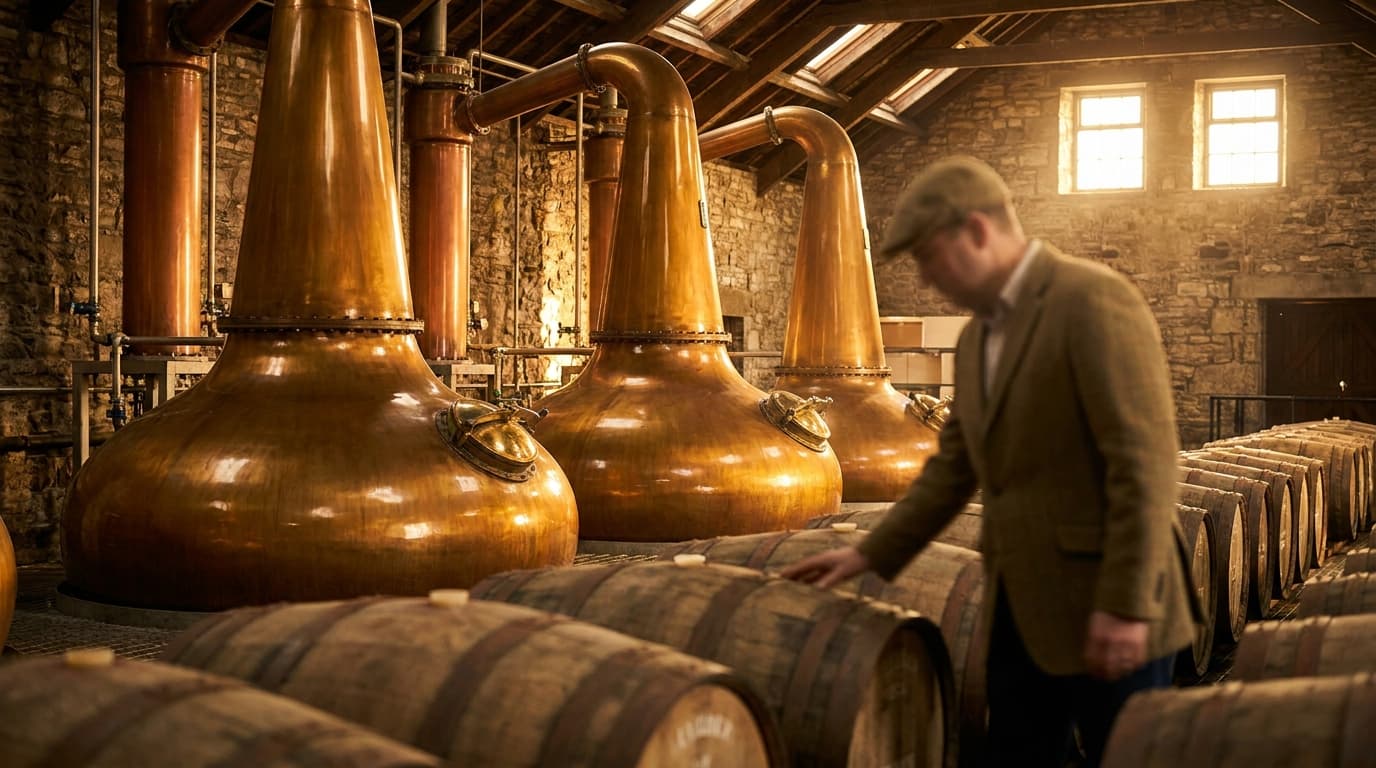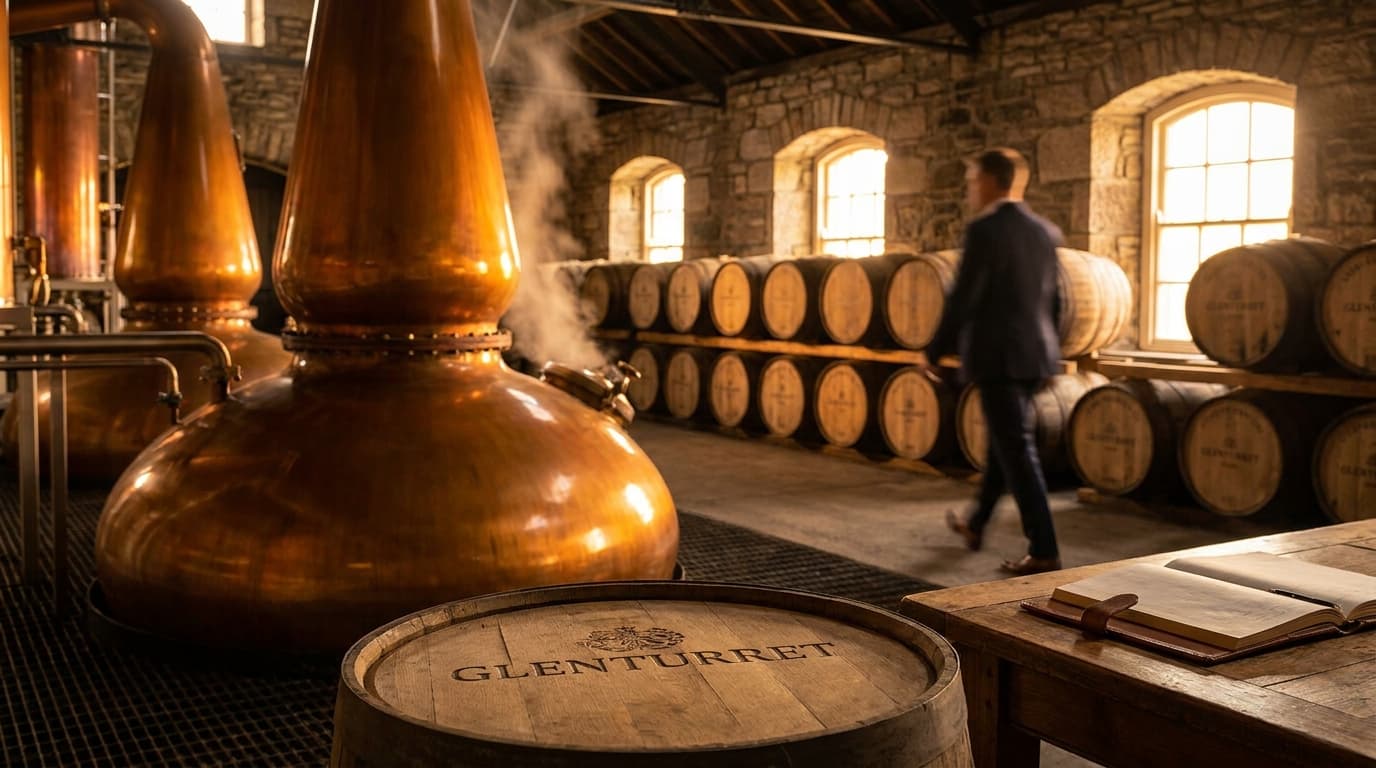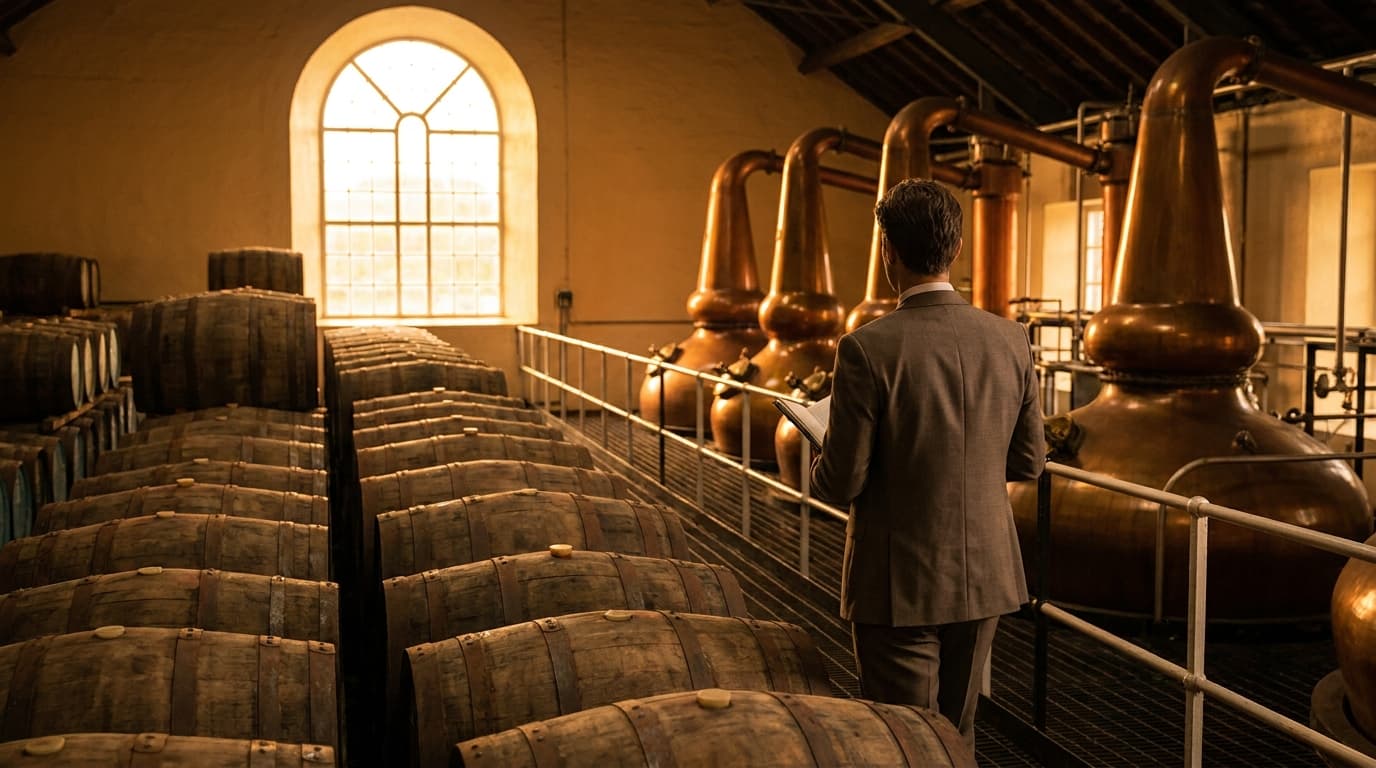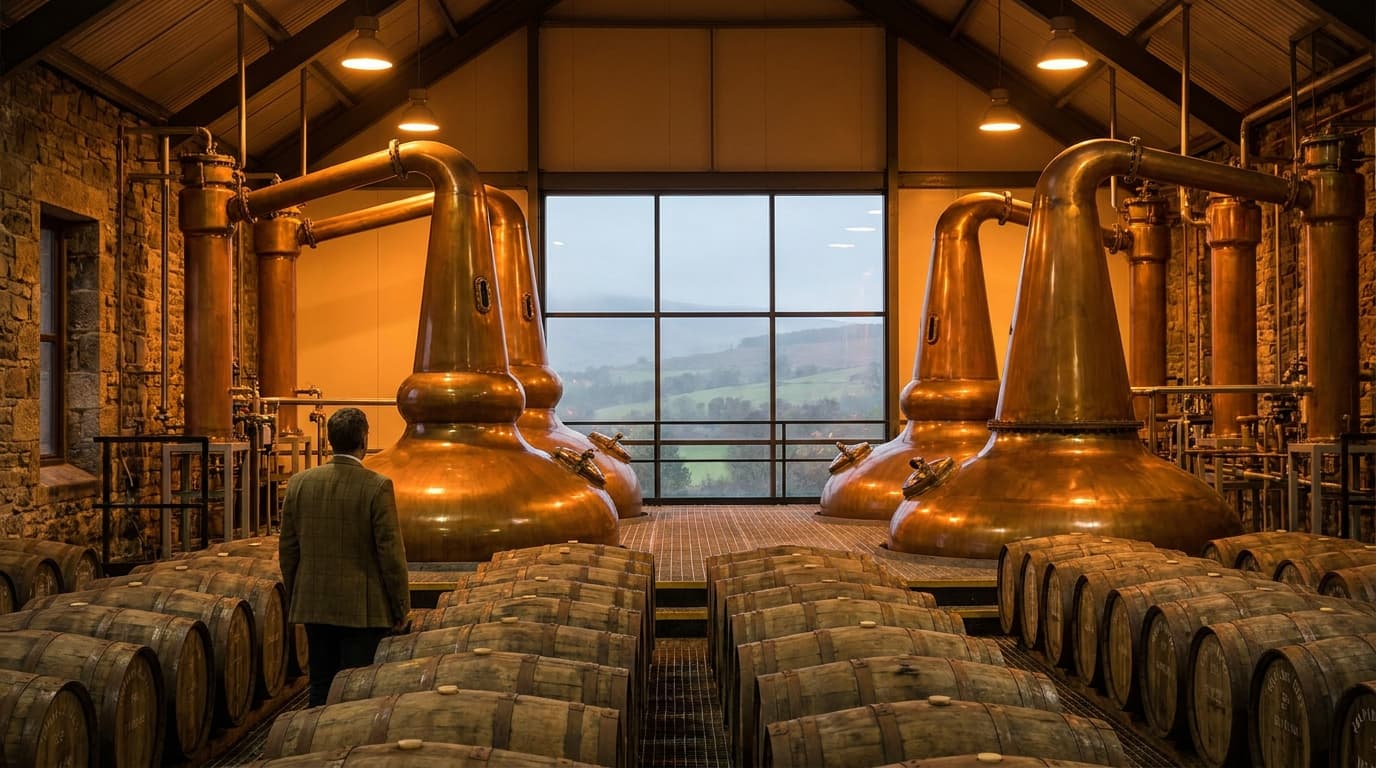
Distillery silence is not a new phenomenon in whisky. What is new in 2026 is the pace at which it is happening, and the scale of the brands going quiet. Brown-Forman has halted whiskey production at Irish distillery Slane "for the next number of years" to align with market conditions, with the confirmation landing in late May and early June. Diageo has paused production at Roseisle Maltings near Elgin, Moray, at least until June 2026, due to a decline in demand. Jim Beam's parent Suntory Global Spirits confirmed that Jim Beam will pause production at its primary Clermont distillery for the duration of 2026, and two MGP Ingredients distilleries in Kentucky also halted production in this period.
For anyone holding a cask from a producer whose stills have gone cold, the obvious question is what happens to the whisky already maturing in bonded warehouses, and what it does to the value of that asset. The answer is more nuanced than it first appears, and it has direct implications for ownership verification.
A pause is not a closure, but it is not nothing either
The first point worth making is that mothballing is rarely permanent in the headline sense. Producers tend to choose careful language. Brown-Forman emphasised that the maltings are not closing permanently, although future production is "under review" in similar terms used by Diageo for Roseisle. Brown-Forman, when explaining the Slane decision, said it had a robust supply of maturing whiskey and that there would be no interruption in availability of Slane for customers worldwide. The Slane visitor centre will remain open, and tours are still available.
What this tells a cask owner is straightforward. The physical inventory continues to mature inside the warehouse, the brand stays on shelves, and the producer keeps a public face open. The casks in question are not stranded, and they are not orphaned in any operational sense.
But the second order effects matter. A producer that pauses distilling is signalling that the maturing stock already in warehouse is more than enough to cover demand in the visible future. Irish whiskey exports fell 5% in 2025, according to Bord Bia, Ireland's food and beverage development agency, which is the kind of figure that triggers these decisions. For an investor, that signal can cut two ways: scarcity from a now-silent distillery, or a softer secondary market because the producer itself is sitting on plenty.
The silent distillery premium is real, but it is not automatic
Whisky lore is full of distilleries that gained value precisely because they stopped producing. Port Ellen, Brora, Rosebank and Caol Ila on its older runs are the standard examples. In 2022 Sotheby's offered Brora 1982 Casks of Distinction with estimates of £700,000 to £1,200,000 each, as Brora and Port Ellen gained cult status. Diageo invested an estimated £185 million to reopen Port Ellen and Brora following the 2017 announcement, which itself drove another wave of collector interest.
It is tempting to extrapolate from those cases to every newly paused distillery, but the precedent is not as clean as marketing material sometimes suggests. Port Ellen and Brora became collectible after decades of silence, with limited surviving stock and a clear regional identity. A modern distillery taking a multi-year production break, with a parent company keeping the brand actively on shelves, sits in a very different category. The "silent" premium tends to apply to genuinely rare, well-aged liquid from sites that were considered lost. A young or mid-aged cask from a newly paused site is not the same proposition.
For cask owners, that means resisting the impulse to revalue holdings upward on the back of a press release. The market will reprice over time, and it will look at supply, age profile, brand demand and the producer's wider strategy, not just at whether the stills happen to be cold this quarter.
Where the real risk sits: records, not maturation
The bigger issue for an investor whose cask sits inside a paused or mothballed brand is not the whisky. It is the paper trail.
There is no central register of whisky cask ownership in the UK. HMRC neither holds nor verifies cask-level ownership data, and the market is not FCA regulated. The Finance Act 2006 removed the legal standing of Delivery Orders as proof of ownership, which is the gap that fraud has been exploiting for years. When a distillery, broker or warehouse counterparty is in normal operating mode, those structural weaknesses are uncomfortable but manageable. When a distillery pauses, a parent restructures, or a broker holding investor records goes under, the lack of independent records becomes a real problem.
Consider the practical chain. Your cask is held under a warehousekeeper's account in a bonded warehouse. The ownership is typically evidenced by paperwork held by the broker who sold the cask, sometimes by an internal ledger reference, occasionally by an updated Delivery Order that no longer has the legal weight it had pre-2006. If the producer's commercial environment changes, the warehouse will still hold the liquid. But if the broker that introduced you to the cask collapses, is acquired, or simply stops responding, reconstructing your title can be slow and expensive. The May 2026 Cask 88 and Braeburn situation made that point painfully clear to a large number of investors who thought their paperwork was watertight.
A production pause does not directly cause those problems. What it does is concentrate minds. When market conditions tighten enough that majors like Diageo and Brown-Forman pause output, the smaller intermediaries up the chain feel it first. Those are exactly the firms most likely to wobble.
What cask owners should actually do
There is a short, practical list when a producer goes quiet on your cask.
Confirm the warehouse holding, not just the broker's word
Get written confirmation from the bonded warehouse itself that the cask is recorded against your name or your account. The warehousekeeper is the regulated party that physically holds the liquid. Their records are the closest thing to a definitive answer in a market that does not have a central register.
Refresh your documentation
Pull together the original purchase invoice, any Delivery Order, regauge reports, and warehouse correspondence. If the brand goes through a corporate transition during the pause, you want your file to look complete now, not after the fact.
Be sceptical of unsolicited revaluations
A common pattern after high-profile production news is a wave of cold-call valuations offering inflated numbers based on the new "silent distillery" status. Treat those approaches with caution. Genuine market repricing for a newly paused distillery takes years, not weeks, and almost never matches what an aggressive broker quotes by phone or email.
Check the producer's stated position
Read what the producer actually said. Brown-Forman has been explicit that supply is robust and that Slane stays on shelves. Diageo, when explaining its decisions, has spoken about aligning production with levels of maturing inventory and described future production as under review. Statements like that are signals about the producer's view of stock levels, which is directly relevant to how mature inventory will be priced.
How verification fits in
This is where independent verification earns its place. CaskID is not a broker. It does not sell casks and has no incentive to confirm a holding that should not be confirmed. When a distillery pauses, the value of having a third party that has cross-checked your cask against warehouse records, photographic evidence and producer-side data goes up, not down. The question an investor needs to answer is no longer just "is my cask real" but "can I prove my ownership cleanly if the commercial environment around this distillery changes".
A silent still is a useful prompt to ask that question while the answer is still easy to obtain.
The quiet message in the noise
The 2026 wave of production pauses is not, on its own, a crisis for cask owners. The whisky continues to mature. The brands remain commercially active. Some of these distilleries will restart within a couple of years and the headlines will fade. But the pauses are a reminder that the cask market sits on top of paperwork standards that were not designed for the volume of retail investors now holding individual casks. The producers can pause production. The market structure around ownership cannot pause its weaknesses. Cask owners who treat a distillery announcement as a cue to tighten their own records, rather than to chase a speculative revaluation, will be in a far better position when the next piece of industry news lands.