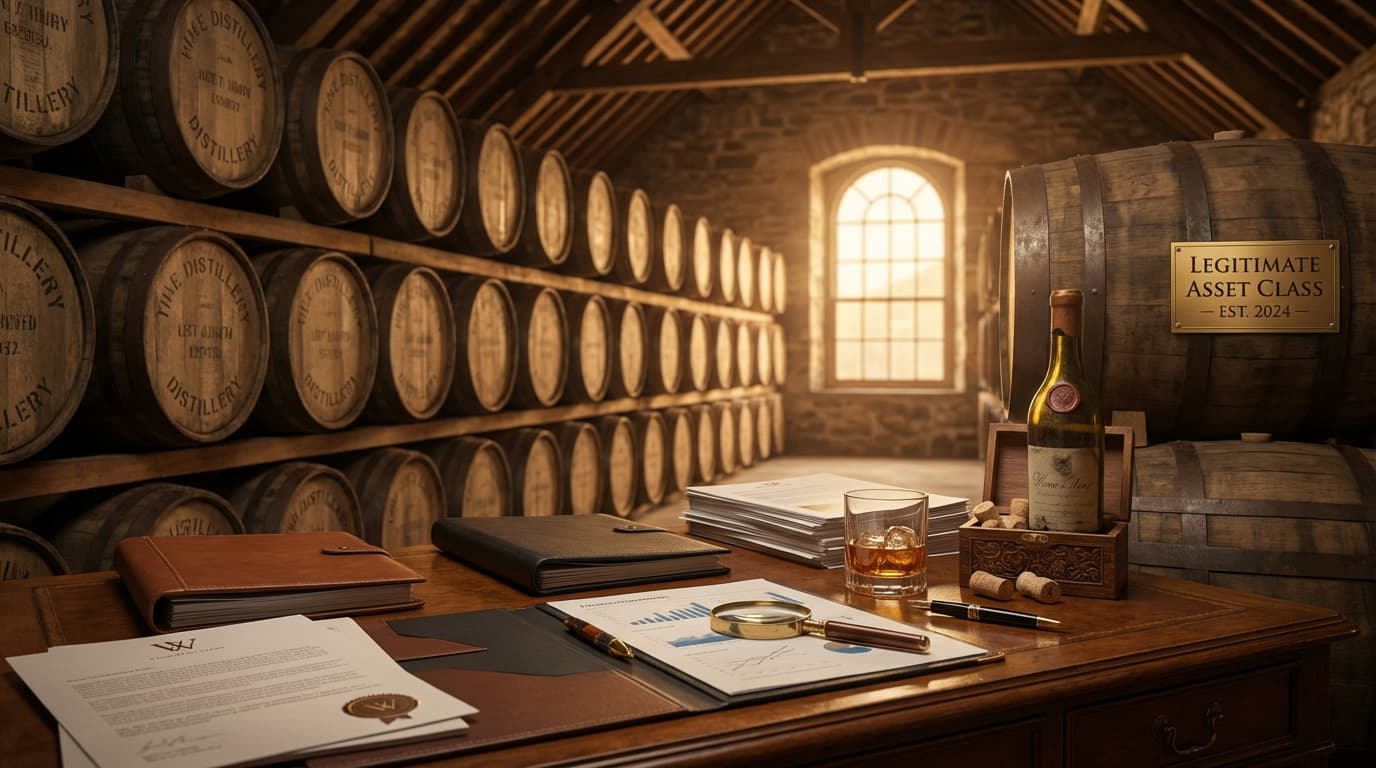
Fine wine and whisky casks both appeal to investors seeking tangible, appreciating alternative assets amid volatile stock markets. However, each offers distinct profiles in terms of liquidity, storage, maturation potential, and risk factors. This comparison explores their pros and cons, major challenges as alternative investments, and critical steps needed to elevate them from niche hobbies to recognized asset classes—while highlighting whisky casks' unique advantages and the role of independent verification in investor protection.[1][3]
In 2026, with whisky outperforming the S&P 500 by 68% over the past five years according to recent market data, and fine wine showing steady but more moderate returns, understanding these differences is essential for portfolio diversification.[3]
Pros and Cons of Fine Wine Investment
Fine wine has long been a staple for high-net-worth individuals, with established indices like the Liv-ex Fine Wine 100 tracking performance. Its appeal lies in proven longevity and accessibility.
Pros of Fine Wine
- Historical Performance and Stability: Fine wine has delivered average annual returns of 8-12% over decades, often with lower volatility than equities. Iconic labels like Bordeaux first growths or Burgundy grand crus provide a track record backed by auction houses such as Sotheby's and Christie's.[1]
- Liquidity and Market Infrastructure: A mature secondary market exists, with platforms like Vinovest and Cult Wines enabling fractional ownership and quick trades. Investors can sell bottles or cases within weeks, unlike illiquid cask holdings.[1]
- Shorter Holding Periods: Many wines reach peak value within 10-20 years, allowing faster capital recycling compared to whisky casks that require 15+ years for optimal maturation.[3]
- Diversification Benefits: Wine correlates poorly with stocks and bonds, acting as an effective hedge during economic downturns.
Cons of Fine Wine
- High Storage and Maintenance Costs: Climate-controlled cellars are mandatory, with annual fees of 0.5-1% of value. Counterfeit risks demand authentication expertise or third-party services.[1]
- Vintage Dependency and Market Cycles: Prices fluctuate with weather, geopolitics, and consumer trends; overproduction in regions like Australia has led to 2025 price corrections.[4]
- Lower Upside Potential: While stable, fine wine rarely delivers whisky-like explosive growth, with recent indices showing single-digit annual gains amid premiumization shifts.[4]
Pros and Cons of Whisky Cask Investment
Whisky casks, particularly Scotch, have gained traction as a high-growth alternative, driven by global demand surges in Asia and North America. The Rare Whisky Index's 478% rise underscores their potential, though the market remains nascent.[3][1]
Pros of Whisky Casks
- Superior Appreciation Potential: Casks from top distilleries can appreciate 10-20% annually post-maturation, outpacing fine wine due to scarcity—top producers have cut output, making 18+ year-old casks rare.[1][2]
- Ongoing Maturation Value: Unlike bottled wine, casks continue aging in bonded warehouses, enhancing flavor and value without investor intervention. Experts recommend holding to at least 18 years for premium status.[2]
- Tax Advantages: In the UK, casks held in bond defer VAT and duty until bottling, improving net returns.[2]
- Passion and Utility: Investors enjoy tastings, blending options, or bottling rights, blending financial and lifestyle appeal.[1]
Cons of Whisky Casks
- Illiquidity and Long Horizons: Selling requires a buyer network; secondary markets are emerging but fragmented. Minimum 10-15 year holds tie up capital.[2][3]
- Higher Entry Barriers: Whole casks start at £5,000-£15,000, though fractional platforms lower this to hundreds of pounds.[1]
- Unregulated Market: 2026 updates to WOWGR improved warehouse oversight post-2025 insolvencies, but retail cask sales remain unregulated, heightening fraud risks.[2]
| Aspect | Fine Wine | Whisky Casks |
|---|---|---|
| Avg. Annual Return | 8-12%[1] | 10-20% post-maturation[1][3] |
| Liquidity | High (weeks to sell)[1] | Low (months/years)[2] |
| Hold Period | 10-20 years | 15+ years[2] |
| Storage Costs | 0.5-1% annually | ~1% (warehouse fees)[2] |
| Regulation | Mature indices/markets | Unregulated retail[2] |
Major Challenges Facing Each Sector
Both assets grapple with hurdles preventing institutional adoption, but whisky casks face more acute transparency issues.
Challenges in Fine Wine
- Counterfeiting and Provenance: High-profile scandals, like Rudy Kurniawan's 2012 conviction for faking rare bottles, persist. Authentication relies on experts and lab tests, but costs deter smaller investors.[1]
- Supply Glut and Oversupply: 2025 saw price drops in non-premium segments due to increased plantings in the New World, weakening scarcity narratives.[4]
- Environmental Pressures: Climate change threatens vineyards, with 2026 forecasts predicting heatwaves impacting Bordeaux yields.[4]
Challenges in Whisky Casks
- Fraud and Ownership Disputes: Duplicate images, fake staves, and broker insolvencies—as seen in 2025—erode trust. Independent verification is vital to confirm authenticity and warehouse holdings.[2]
- Market Volatility: A 2025 supply glut of aged casks led to slower auction sales, even for 20-30-year-olds, prompting price adjustments.[4][7]
- Lack of Standardization: No universal valuation index exists, unlike wine's Liv-ex; reliance on brokers introduces bias.[3]
Whisky casks' unregulated status amplifies these risks, making tools like AI-powered image detection for duplicates essential for due diligence.[2]
Unique Aspects of Whisky Cask Investment
Whisky stands out with its distillery prestige—names like Macallan or Glenfiddich drive premiums akin to wine chateaux but with maturation upside. Global Scotch exports hit records, fueled by Asia's demand, contrasting wine's mature markets.[1] Digital innovations, including fractional ownership and AI maturation forecasts, are accelerating liquidity.[1] For UK, US, and Asian investors, casks offer a spirits-specific hedge against wine's cyclicality.
What They Need to Become Genuine Asset Classes
To transition from hobby to institutional staple, both require infrastructure mirroring stocks or art.
Shared Requirements
- Standardized Indices and Benchmarks: Wine has Liv-ex; whisky needs a cask-specific equivalent for transparent pricing.[3]
- Enhanced Liquidity Platforms: Peer-to-peer marketplaces and ETFs could enable daily trading.[1]
- Regulatory Frameworks: Clear rules on ownership transfer and disclosure would attract pensions and funds.
Wine-Specific Needs
- Tech-Driven Authentication: Blockchain provenance tracking to combat fakes at scale.
Whisky Cask-Specific Needs
- Independent Verification Standards: Services confirming ownership, authenticity, and condition via AI (e.g., multi-method image analysis) and warehouse audits build trust. In 2026's consolidation phase, platforms providing real-time dashboards on verification status and valuations are crucial.[1][2]
- Bonded Warehouse Mandates: Ensuring full legal ownership mitigates risks from broker failures.[2][3]
With falling interest rates boosting demand for alternatives, 2026 offers a rebound window—whisky casks could lead if verification gaps close.[3][7]
Conclusion
Fine wine suits conservative diversifiers with its liquidity and stability, while whisky casks reward patient investors with higher potential returns amid scarcity. Both face provenance and liquidity challenges, but whisky casks' unregulated nature demands rigorous verification to unlock their edge. By prioritizing independent audits and digital transparency, investors can mitigate risks and position whisky as a premier asset class. For cask owners, tools like CaskID's Vision API exemplify how AI safeguards portfolios in this evolving market, ensuring ownership security at just £1.99 per cask monthly.